Skip to main content Skip to footer
Inadequate surface preparation is consistently the leading cause of premature industrial coating failure, not the coating itself. When contaminants, mill scale, or residual corrosion remain on a substrate, even a high-performance powder coating loses adhesion integrity well before its intended service life. Fabrication facilities that treat surface preparation as a secondary concern routinely face accelerated delamination, corrosion undercutting, and costly rework cycles.
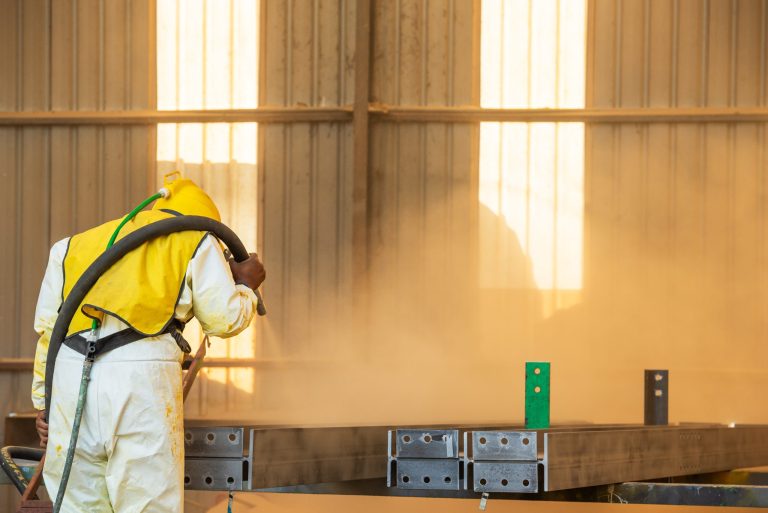
Proper abrasive cleaning, when executed under controlled industrial standards, removes those failure points entirely. Sandblasting in Rochester creates the anchor profile a coating needs to bond at the substrate level, not merely at the surface. Professional Powder Coating blasts to SSPC standards, ensuring every substrate arrives at the coating stage in a condition that supports long-term performance. Metal fabrication facilities operating in corrosion-critical environments depend on this level of preparation precision to extend material lifespan and protect structural integrity across demanding service environments.
People Also Ask
Why does surface profile depth matter for coating performance
Abrasive blasting creates a surface profile (anchor pattern) of microscopic peaks and valleys that coatings mechanically “key” into for adhesion. If the profile is too smooth, coatings may not bond well; if it’s too rough, achieving adequate, uniform film thickness over the peaks can be difficult and can reduce durability.
How long does sandblasted steel last before needing recoating?
Service life depends heavily on the coating system and exposure conditions, but one industry source commonly cites about 15–25 years or longer for properly sandblasted steel with quality coatings. Harsher environments (salt, chemicals, constant moisture) can shorten life, while robust coating specs and maintenance can extend it.
Why Sandblasting in Rochester Prevents Premature Coating Failure
Heavy corrosion, existing paint layers, and chemical contamination all compromise the bond between a new coating and its substrate. Removing them through controlled abrasive blasting is not optional preparation; it is the foundation of coating performance. Facilities that skip or underperform this step consistently see coating failures that trace directly back to surface condition at application time.
Industrial environments impose severe exposure demands, including moisture ingress, chemical contact, and mechanical stress. Matching preparation intensity to the application’s actual exposure severity is a critical decision point. A substrate destined for a corrosive energy sector environment requires a materially more aggressive blast profile than one entering a controlled interior setting. Professional Powder Coating evaluates each project’s exposure classification before selecting the appropriate SSPC-compliant blast standard, ensuring the preparation method aligns with the coating system’s performance requirements. This alignment is what separates durable results from premature failures.
Matching Abrasive Media for Sandblasting in Rochester
Different fabrication metals respond differently to abrasive media, and selecting the wrong type introduces substrate damage that undermines the entire coating process. Heavy structural steel destined for energy infrastructure or heavy equipment and machinery applications typically demands aggressive angular grit to achieve the anchor profile required by high-build epoxy or polyester powder coatings. In high-corrosion applications, systems such as Fusion Bond Epoxy (FBE) are often specified to further enhance corrosion resistance at the substrate level. Softer or thinner substrates require finer, less aggressive media to preserve dimensional integrity.
Facilities managing sandblasting in New York operate under environmental compliance requirements that influence media selection and containment protocols. Operations handling sandblasting in NYC face particularly strict regulatory standards, requiring enclosed blast systems and rigorous waste management practices. Professional Powder Coating’s process accounts for both technical substrate requirements and compliance obligations simultaneously. The result is a prepared surface that meets SSPC standards, supports ASTM-compliant coating adhesion, and arrives at the application stage without contamination or profile inconsistency. This level of media discipline is a direct differentiator against non-specialized blasting operations that apply a single approach across all substrates.
How Professional Powder Coating Ltd. Delivers Sandblasting in Rochester
Professional Powder Coating provides precise surface restoration for complex fabrication projects, including the capability to handle large, heavy, and long items that most facilities cannot accommodate. Beyond new fabrication, the team offers in-house chemical and patent stripping services, removing existing paint or powder coatings entirely and refurbishing components to a condition ready for a new engineered coating system. This full-cycle capability extends product life materially rather than simply applying a new coat over a compromised surface.
Every blast operation meets SSPC standards, and all subsequent coatings adhere to ASTM standards, UL certifications, CSA standards, and NEMA requirements relevant to the application. Local manufacturing operations seeking reliable surface preparation benefit from requesting a comprehensive project evaluation in which substrate type, exposure environment, and coating system requirements are assessed together. This is especially important when applying high-performance systems such as Fusion Bond Epoxy (FBE), where surface profile and cleanliness directly impact long-term corrosion protection.
For fabrication managers who understand that coating longevity begins at the blast stage, Professional Powder Coating delivers the preparation discipline and coating expertise that generic shops consistently fall short of. Contact us today!