 Skip to main content Skip to footer
Industrial assets operate in environments where corrosion, contamination, weather exposure, and previous coating failures gradually reduce performance. Whether the project involves structural steel, marine equipment, manufacturing machinery, commercial buildings, or restoration work, surface preparation determines how well the finished coating performs throughout its service life.
- Sand blasting removes rust, old coatings, contaminants, and surface imperfections before new protective finishes are applied.
- Proper surface preparation significantly improves coating adhesion, durability, and corrosion resistance.
- Different abrasive media are selected based on the substrate, project requirements, and desired surface profile.
- Industrial sand blasting supports applications in manufacturing, marine, commercial, infrastructure, restoration, and heavy equipment.
- Graffiti removal projects require carefully controlled blasting techniques to preserve the underlying surface.
- Large-scale blasting projects depend on proper planning, quality control, environmental management, and experienced operators.
- Selecting professional sand blasting services helps reduce maintenance costs, extend asset life, and improve the long-term performance of protective coating systems.
Sandblasting remains one of the most effective methods for preparing metal, concrete, masonry, and other industrial substrates for painting, powder coating, or other protective finishes. Properly executed sandblasting services remove contaminants, create an ideal surface profile, and improve coating adhesion while supporting longer maintenance intervals.
However, not every project requires the same blasting media, equipment, containment strategy, or production schedule. Industrial facilities, commercial property owners, and project managers benefit from understanding how different abrasive blasting techniques are selected, where they provide the greatest value, and what separates experienced contractors from general blasting providers.
This guide explains how modern sandblasting services support industrial maintenance, restoration, coating preparation, marine applications, graffiti removal, and large commercial projects.
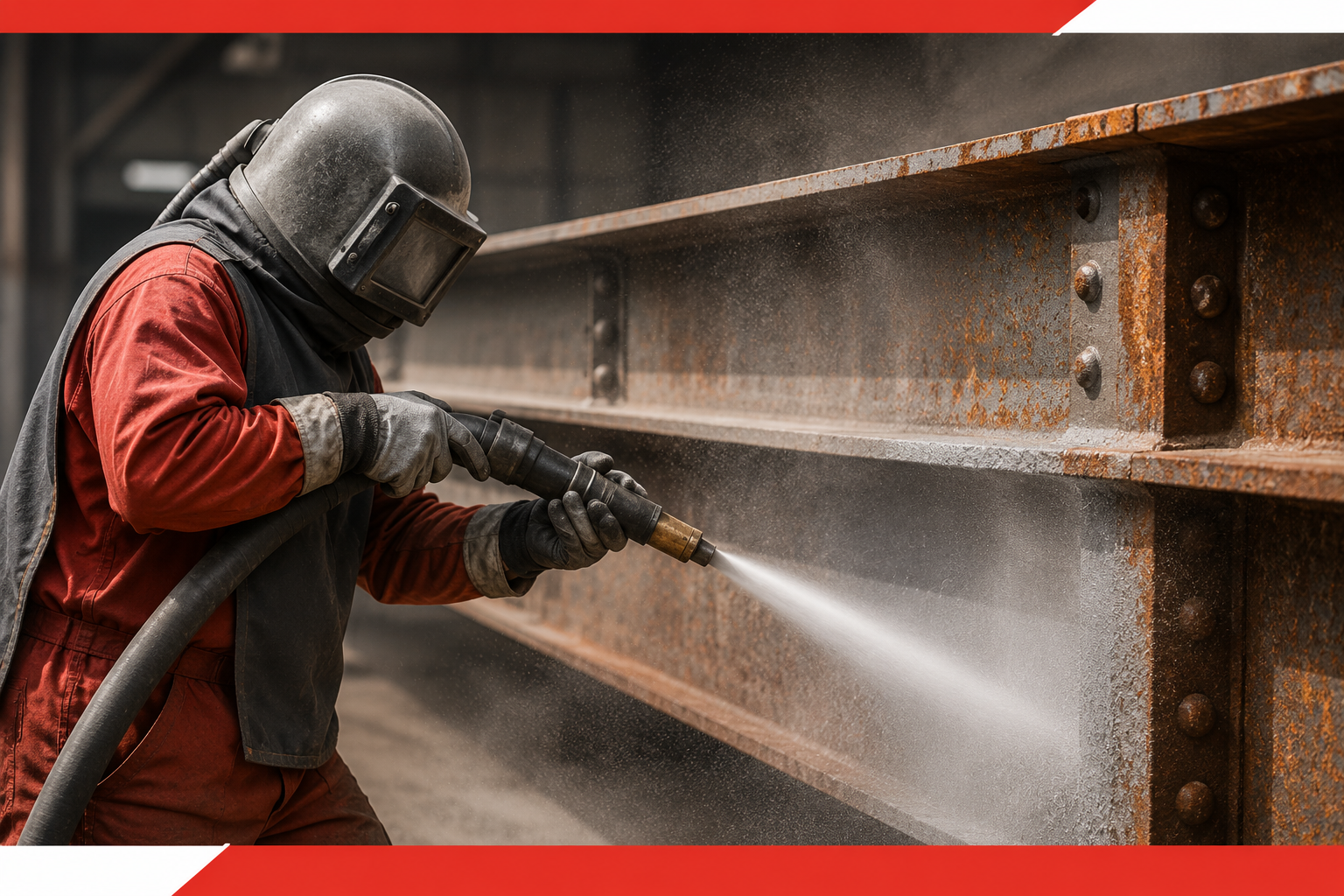
Sandblasting is far more than a surface cleaning process. It is a critical stage in industrial maintenance that directly influences coating adhesion, corrosion resistance, equipment longevity, and overall project success. Whether restoring structural steel, preparing marine assets, removing graffiti from commercial properties, or refurbishing heavy machinery, proper surface preparation creates the foundation for durable protective finishes. Choosing the correct abrasive media, blasting method, and experienced contractor ensures that coatings perform as intended while reducing long-term maintenance costs and minimizing premature failures.
Industrial projects rarely share the same requirements. Factors such as substrate material, existing coatings, environmental exposure, production schedules, and safety regulations all influence the blasting approach. Modern abrasive blasting has evolved to provide specialized solutions that improve efficiency while protecting sensitive surfaces and meeting increasingly demanding industry standards. Understanding these differences allows facility managers, engineers, contractors, and property owners to make informed decisions before investing in coating systems or restoration work.
Why Surface Preparation Determines Project Success
Many coating failures are incorrectly blamed on paint quality when the underlying cause is inadequate surface preparation.
Even premium industrial coatings cannot compensate for contaminants trapped beneath the surface. Rust, mill scale, oxidation, oil residue, old coatings, and embedded debris create weak bonding points that eventually lead to peeling, blistering, corrosion, or premature coating failure.
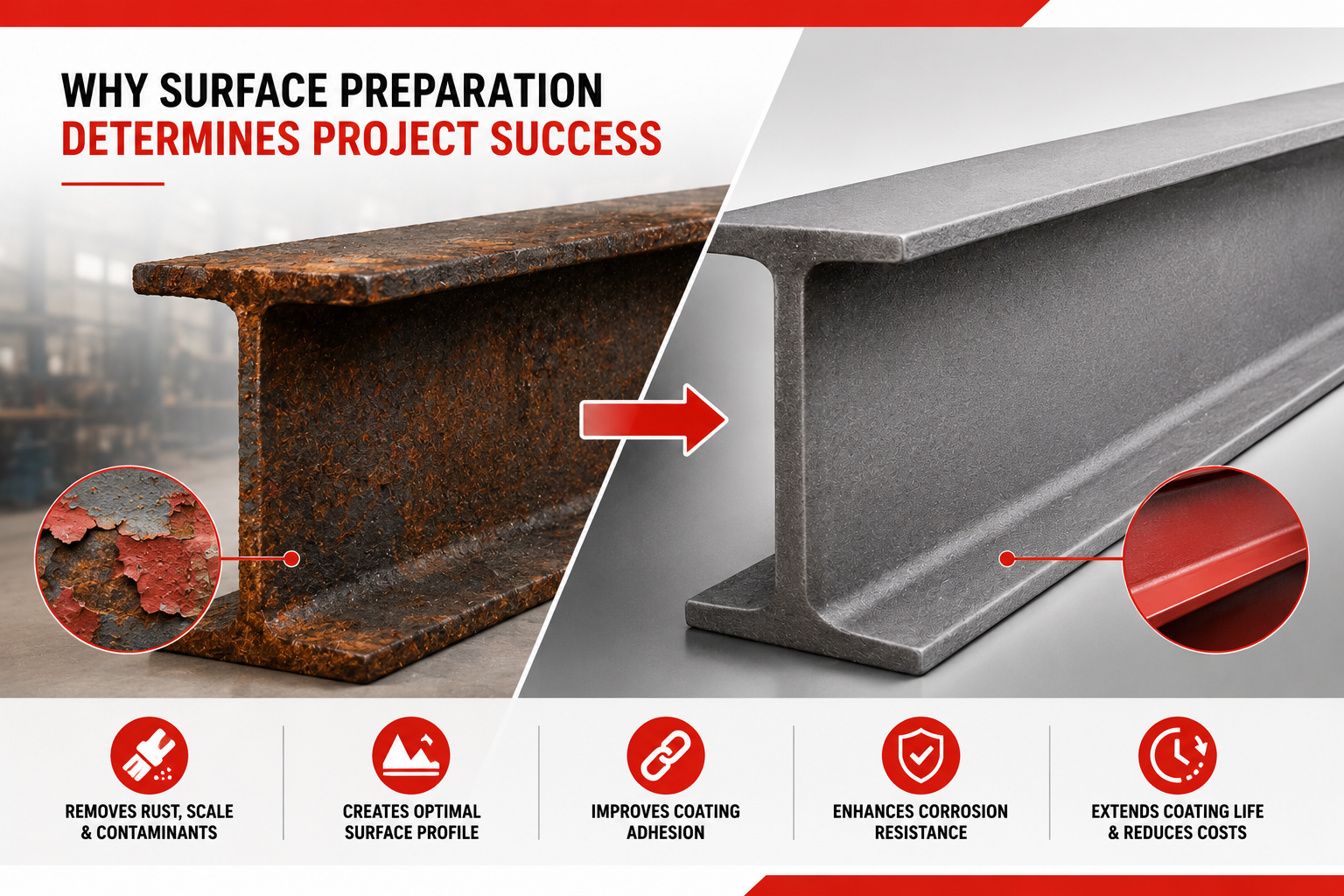
Professional blasting services prepare the substrate by:
- Removing corrosion products
- Eliminating deteriorated coatings
- Cleaning embedded contaminants
- Producing a consistent anchor profile
- Creating a uniform surface for coating adhesion
Rather than being a cosmetic process, blasting establishes the foundation on which every protective coating depends.
Without proper preparation, maintenance cycles become shorter, repair costs increase, and production interruptions become more frequent.
Need reliable surface preparation before your next coating project? Contact Professional Powder Coating Ltd. to discuss the right blasting solution for your industrial application.
Understanding Modern Sand Blasting and Abrasive Blasting Methods
Although the term “sandblasting” remains widely used, modern industrial operations use a variety of abrasive materials depending on the substrate, environmental conditions, and desired finish.
How Abrasive Blasting Works
High-velocity abrasive particles strike the surface, removing contaminants through controlled impact.
The process simultaneously:
- Removes corrosion
- Strips coatings
- Cleans oxidation
- Roughens smooth metal
- Creates mechanical adhesion profiles
This combination makes industrial sand blasting one of the most efficient preparation methods for industrial coatings.
Common Blasting Media
Different abrasives are selected according to the application.
Examples include:
- Steel grit
- Steel shot
- Aluminum oxide
- Garnet
- Glass bead
- Crushed glass
- Plastic media
- Walnut shells
- Baking soda
- Specialty mineral abrasives
Media selection depends on factors such as:
- Surface hardness
- Coating specification
- Required finish
- Material sensitivity
- Environmental controls
- Recyclability
Choosing the wrong abrasive may damage substrates or produce an unsuitable surface profile.
Wet Versus Dry Blasting
Industrial contractors may recommend either wet or dry blasting.
Dry blasting generally offers:
- Faster production
- Better coating profiles
- Greater versatility
Wet blasting may reduce:
- Dust generation
- Heat buildup
- Static electricity
- Airborne particles
Each method serves different project requirements.
Looking for experienced sand blasting services? Our team can recommend the proper blasting media and preparation method for your project.
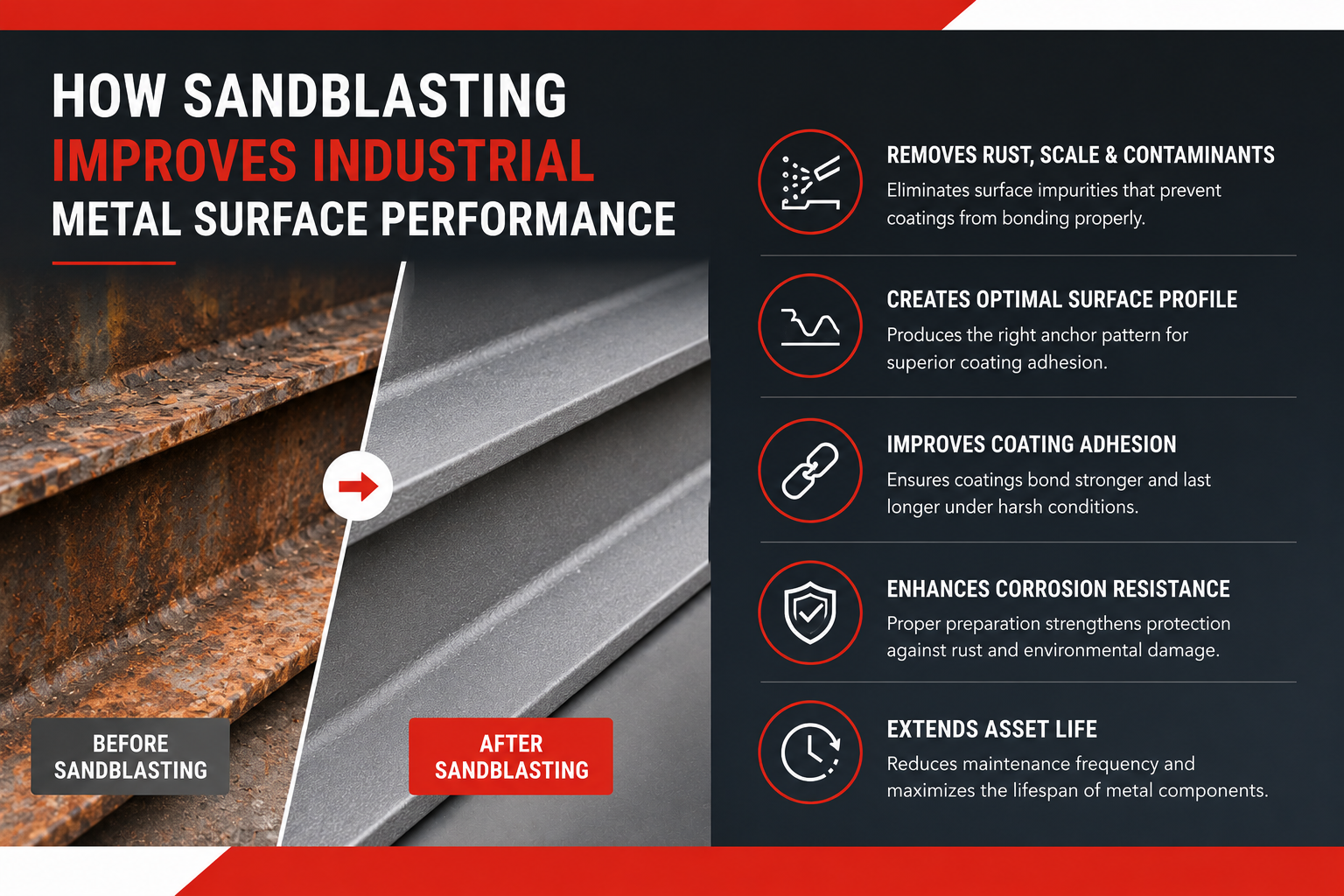
How Sand Blasting Improves Industrial Metal Surface Performance
Industrial steel is continuously exposed to moisture, chemicals, temperature fluctuations, mechanical wear, and environmental contaminants.
Proper blasting restores surfaces before deterioration progresses into structural damage. Read more on how sandblasting improves industrial metal surfaces.
Complete Rust Removal
Rust spreads beneath coatings even when only small areas are visible.
Industrial sandblasting removes corrosion from:
- Structural steel
- Pipe systems
- Fabricated components
- Heavy equipment
- Storage tanks
- Industrial machinery
Removing corrosion completely prevents coating systems from trapping active oxidation beneath new finishes.
Removal of Mill Scale
Fresh steel often contains mill scale left behind during manufacturing.
Although it appears durable, mill scale eventually separates from the steel underneath.
Blasting removes this unstable layer before coatings are applied.
Surface Profiling
Industrial coatings require microscopic roughness to create strong mechanical adhesion.
Abrasive impact produces a controlled anchor profile that significantly improves bonding strength.
The appropriate profile depends on:
- Coating thickness
- Coating chemistry
- Service environment
- Industry standards
Better Coating Adhesion
Prepared surfaces allow primers and coatings to:
- Flow evenly
- Bond securely
- Cure consistently
- Resist peeling
Improved adhesion extends coating lifespan while reducing maintenance frequency.
Uniform Surface Appearance
Uneven surfaces create inconsistent coating thickness and visual defects.
Professional blasting produces consistent preparation across the entire substrate.
This consistency improves both appearance and protective performance.
Protect your industrial assets from premature coating failure with professionally prepared surfaces. Speak with Professional Powder Coating Ltd. today.
Selecting the Right Sand Blasting Services for Industrial Projects
Choosing a contractor involves more than finding blasting equipment.
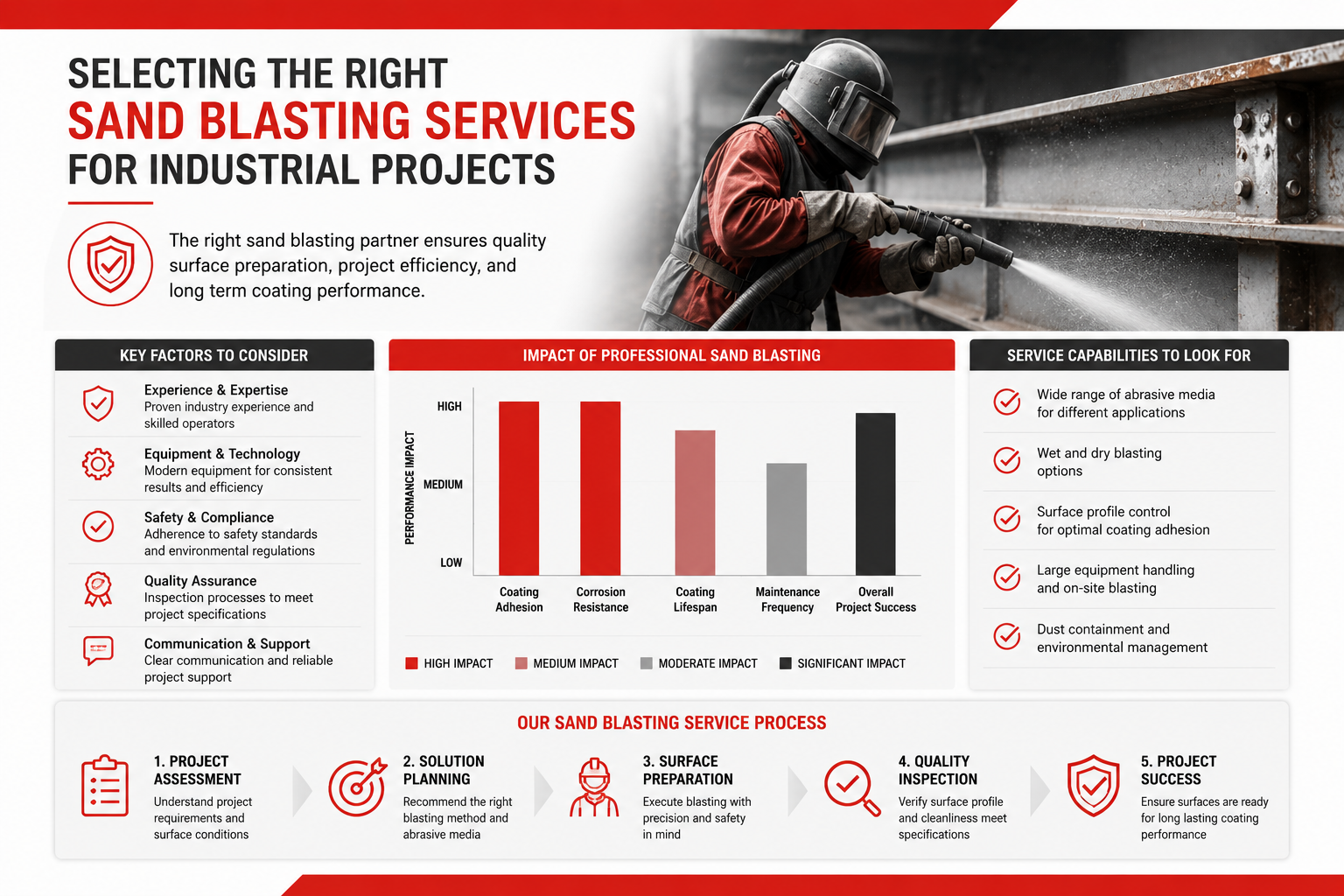
Industrial projects demand experience, planning, safety procedures, and technical understanding. Read more on what to look for in professional sandblasting services.
Experience With Industrial Assets
Different industries require different preparation standards.
Experienced contractors understand the requirements for:
- Manufacturing facilities
- Structural steel
- Marine equipment
- Commercial buildings
- Industrial fabrication
- Heavy equipment
Project familiarity reduces delays and quality issues.
Surface Evaluation
Professional contractors begin with detailed inspections that assess:
- Existing coatings
- Corrosion severity
- Material condition
- Surface contamination
- Required finish
- Accessibility
This evaluation determines the proper blasting method before work begins.
Equipment Capability
Large industrial projects require production equipment capable of maintaining consistent blasting quality across substantial surface areas.
Equipment selection influences:
- Productivity
- Uniformity
- Project duration
- Surface consistency
Environmental Controls
Dust containment, waste collection, and media recovery become increasingly important on commercial sites.
Responsible contractors implement appropriate containment strategies that reduce environmental impact while protecting nearby operations.
Quality Control
Reliable sandblasting services verify preparation quality through inspections that confirm:
- Surface cleanliness
- Profile depth
- Uniformity
- Remaining contaminants
- Specification compliance
Quality verification prevents coating failures later. Restore metal surfaces with precision surface preparation designed for long-lasting coating performance. Get in touch with our specialists today.
Industrial Sand Blasting Applications Across Multiple Industries
Surface preparation supports a wide range of industrial sectors.
Manufacturing Facilities
Manufacturing environments use blasting during:
- Equipment refurbishment
- Production line upgrades
- Structural maintenance
- Facility renovations
Prepared surfaces improve protective coatings that resist ongoing industrial wear.
Structural Steel
Steel structures require preparation before:
- Priming
- Painting
- Fireproofing
- Corrosion protection
Proper blasting helps coatings perform over extended service periods.
Heavy Equipment
Construction, mining, and industrial equipment experience:
- Impact damage
- Abrasion
- Moisture exposure
- Chemical contamination
Blasting restores surfaces before recoating.
Commercial Buildings
Commercial assets often require blasting for:
- Exterior restoration
- Structural maintenance
- Parking structures
- Decorative metal features
These projects improve both appearance and durability.
Infrastructure
Infrastructure maintenance frequently includes blasting for:
- Bridges
- Utility structures
- Public facilities
- Transportation equipment
Surface preparation supports long-term asset preservation.
Why Industrial Sand Blasting Plays a Critical Role in Marine Applications
Marine environments present one of the harshest operating conditions for metal assets. Constant exposure to saltwater, humidity, ultraviolet radiation, and changing temperatures accelerates corrosion far more quickly than in inland environments.
Protective coatings alone cannot prevent deterioration when applied over contaminated or poorly prepared surfaces. This is why industrial sand blasting for marine applications is considered a fundamental step before installing marine coating systems.
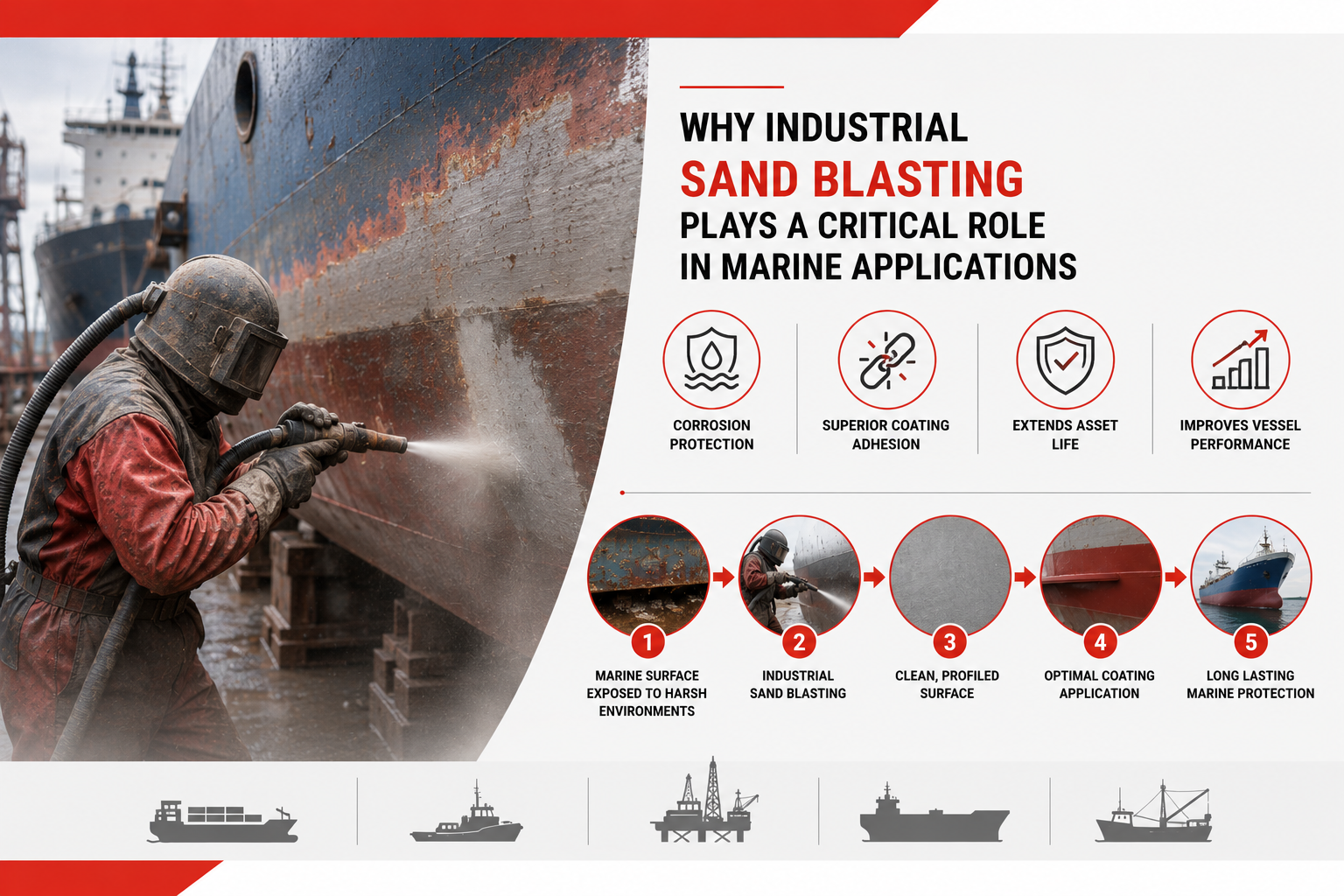
Removing Salt Contamination
Marine equipment accumulates chlorides that remain embedded within surface corrosion.
Blasting removes:
- Salt deposits
- Rust layers
- Marine growth residue
- Weathered coatings
Removing these contaminants helps prevent corrosion from continuing beneath newly applied coatings.
Preparing Steel for High-Performance Coating Systems
Marine coating specifications often require strict surface cleanliness standards before application.
Proper blasting produces:
- Uniform cleanliness
- Consistent anchor profiles
- Improved coating adhesion
- Longer coating life
This preparation allows marine coatings to achieve their intended performance.
Supporting Asset Longevity
Marine assets represent major capital investments.
Proper surface preparation helps protect:
- Barges
- Ship components
- Offshore structures
- Marine fabrication
- Dock equipment
- Waterfront infrastructure
Longer coating performance reduces maintenance costs throughout the asset lifecycle. Planning a marine maintenance project? Let Professional Powder Coating Ltd. help you prepare surfaces for maximum coating durability.
Sand Blasting Services for Graffiti Removal and Surface Restoration
Graffiti creates both visual and maintenance challenges for commercial and industrial properties. Traditional chemical removal methods may damage sensitive substrates, while aggressive mechanical cleaning can leave permanent surface scars.
Professional sand blasting services for graffiti removal offer an effective restoration method when carefully matched to the substrate.
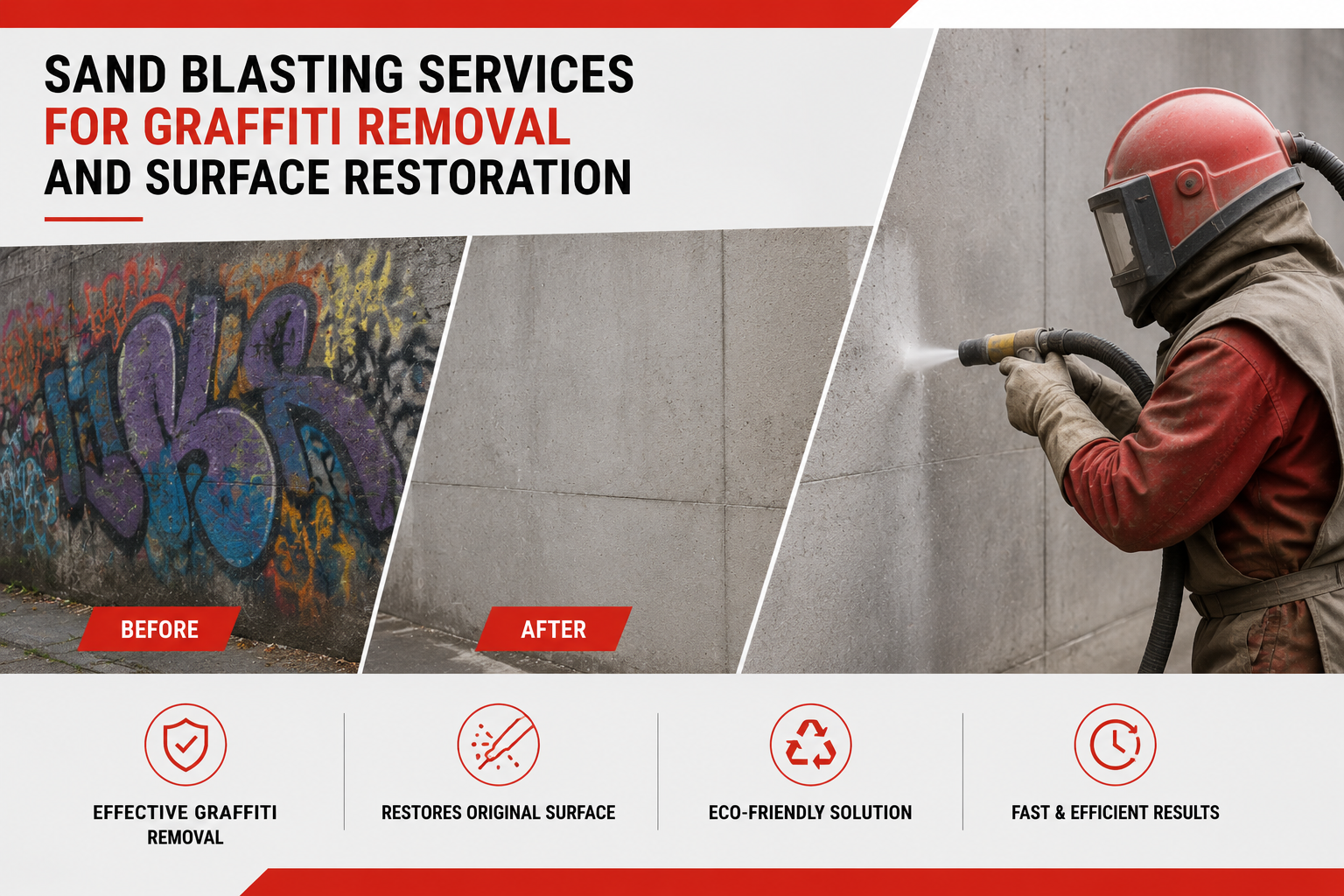
Removing Paint Without Excessive Surface Damage
Different surfaces require different blasting media.
Professional contractors adjust:
- Abrasive type
- Air pressure
- Nozzle size
- Blasting angle
- Production speed
This controlled approach removes graffiti while preserving the underlying material.
Suitable Restoration Surfaces
Blasting may be appropriate for:
- Brick
- Concrete
- Stone
- Steel
- Industrial fencing
- Architectural metal
Each surface requires a customized blasting approach rather than a single universal process.
Restoring Commercial Appearance
Prompt graffiti removal helps businesses maintain:
- Professional appearance
- Customer confidence
- Property value
- Building aesthetics
For many commercial facilities, restoration forms part of broader property maintenance programs. Need graffiti removed without damaging the underlying surface? Contact our team to discuss the safest blasting approach for your property.
Evaluating Sandblasting Services for Large Industrial Projects
Large-scale industrial work introduces logistical challenges beyond the blasting process itself.
Successful projects require coordination between contractors, facility management, coating teams, and production schedules. Evaluating sandblasting solutions for large industrial projects requires following the steps.
Production Planning
Industrial shutdowns often have limited maintenance windows.
Professional contractors coordinate:
- Equipment mobilization
- Crew scheduling
- Material delivery
- Surface preparation sequencing
- Coating handoffs
Efficient planning minimizes operational downtime.
Access Challenges
Large facilities frequently include:
- Elevated structures
- Confined spaces
- Complex steel assemblies
- Long pipe runs
- Difficult equipment layouts
Contractors develop access strategies before blasting begins.
Consistent Surface Quality
Large projects demand uniform preparation across thousands of square feet.
Quality control procedures ensure consistent blasting regardless of project size.
Integration With Coating Contractors
Surface preparation and coating application should occur within specified timeframes.
Delays between blasting and coating increase the risk of:
- Flash rust
- Surface contamination
- Moisture exposure
- Reduced coating adhesion
Coordination between blasting and coating teams maintains surface quality. Large industrial project coming up? Work with Professional Powder Coating Ltd. for efficient blasting solutions that keep your project on schedule.
Safety Considerations During Abrasive Blasting Operations
Industrial blasting environments require comprehensive safety management.
Professional contractors implement procedures that protect workers, facilities, and surrounding operations.
Personal Protective Equipment
Operators typically wear specialized equipment, including:
- Blast helmets
- Respiratory protection
- Hearing protection
- Protective clothing
- Gloves
- Safety footwear
Proper PPE reduces exposure to dust, noise, and rebounding abrasive.
Dust Management
Dust control supports:
- Worker visibility
- Respiratory safety
- Environmental compliance
- Equipment protection
Containment systems vary depending on project size and location.
Equipment Inspection
Routine inspections reduce operational risks involving:
- Air hoses
- Blast pots
- Nozzles
- Couplings
- Compressors
- Pressure systems
Preventive maintenance contributes to safer operations.
Site Isolation
Industrial blasting areas are isolated to prevent unauthorized access while protecting nearby workers from airborne abrasive and debris.
Safety and quality go hand in hand. Partner with experienced professionals who follow proper blasting procedures from start to finish.
Factors That Influence Blasting Media Selection
Selecting abrasive media requires balancing productivity, surface protection, environmental considerations, and coating requirements.
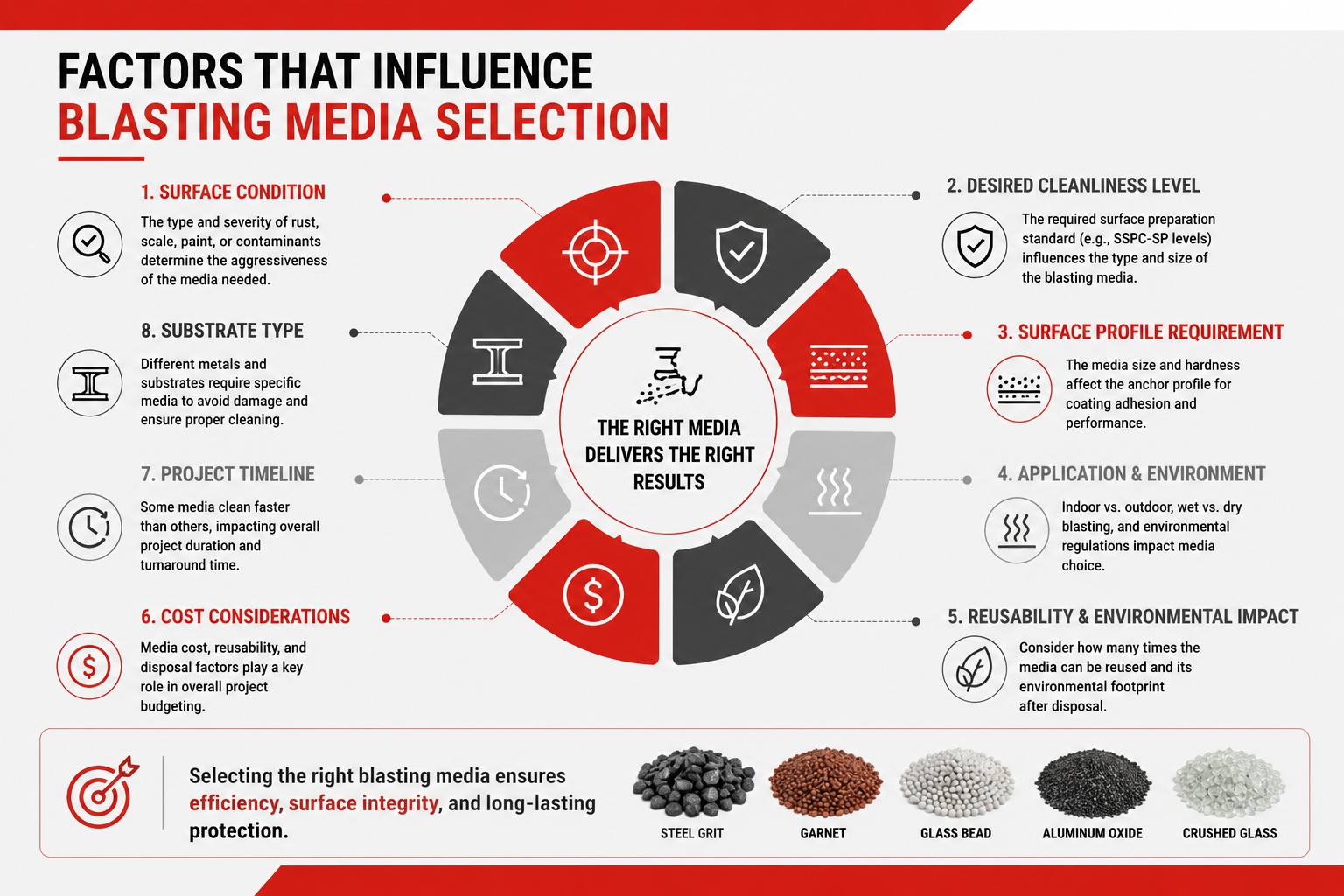
Contractors evaluate several variables before choosing media.
Surface Material
Different substrates respond differently to abrasive impact.
Examples include:
- Carbon steel
- Stainless steel
- Aluminum
- Concrete
- Brick
- Stone
Each material has unique hardness characteristics.
Existing Coating Condition
Older coatings may include multiple layers with varying adhesion.
Media selection varies with coating thickness and removal difficulty.
Required Surface Finish
Some projects require aggressive profiling.
Others prioritize smoother cosmetic finishes.
The final coating specification largely determines the desired surface texture.
Environmental Requirements
Certain facilities require abrasives that:
- Produce less dust
- Are recyclable
- Reduce waste
- Support containment systems
Environmental planning increasingly influences media selection.
Not sure which abrasive media is right for your project? Our specialists can recommend the best option based on your substrate and coating requirements.
Common Mistakes That Reduce Blasting Effectiveness
Several preventable mistakes can reduce project quality.
Choosing Price Over Experience
Lowest pricing often overlooks:
- Surface evaluation
- Quality control
- Equipment capability
- Production planning
Poor preparation typically increases lifecycle costs.
Using Incorrect Abrasive Media
Improper media may:
- Damage substrates
- Create an insufficient profile
- Produce excessive roughness
- Increase cleanup requirements
Media selection should always match the project.
Ignoring Surface Contamination
Oil, grease, and soluble salts may remain after blasting if not addressed during preparation.
Surface testing helps identify contaminants before coating begins.
Delaying Coating Application
Freshly blasted steel begins reacting with moisture immediately.
Coatings should be applied in accordance with the specification to prevent flash rust.
Avoid costly surface preparation mistakes by working with experienced blasting professionals who understand industrial specifications.
How Professional Blasting Services Support Long-Term Asset Protection
Industrial maintenance increasingly emphasizes lifecycle management rather than reactive repairs.
Professional blasting services contribute by:
- Extending coating performance
- Reducing corrosion progression
- Supporting preventive maintenance
- Lowering long-term repair costs
- Improving asset reliability
Instead of repeatedly coating deteriorating surfaces, proper preparation establishes a stronger foundation for every maintenance cycle.
Facilities that prioritize preparation often experience fewer coating failures, reduced shutdown frequency, and more predictable maintenance planning.
Conclusion
Surface preparation is one of the most important factors influencing coating durability, corrosion resistance, and long-term asset performance. From restoring industrial machinery and structural steel to preparing marine equipment and removing graffiti from commercial properties, professional sand blasting services provide the clean, consistent foundation required for successful protective coatings.
Choosing experienced abrasive blasting providers ensures that every stage of the project, from surface assessment and media selection to quality control and environmental management, aligns with the asset’s specific requirements. Whether the objective is coating preparation, restoration, or preventive maintenance, properly executed industrial sandblasting helps protect valuable infrastructure while reducing future maintenance demands.
Need dependable surface preparation for your next industrial or commercial project? Contact Professional Powder Coating Ltd. to learn how our sand blasting services can help restore surfaces, improve coating performance, and support long-term asset protection.
Frequently Asked Questions
Why is surface preparation important before applying protective coatings?
Surface preparation removes rust, contaminants, mill scale, and deteriorated coatings while creating an anchor profile that improves coating adhesion and long-term durability.
Can industrial sand blasting remove heavy corrosion?
Yes. Properly selected industrial sand blasting methods can effectively remove significant corrosion, oxidation, and old coatings before new protective systems are installed.
What industries commonly use sandblasting services?
Manufacturing, marine, construction, infrastructure, commercial property maintenance, heavy equipment, fabrication, and industrial maintenance all rely on professional sandblasting services for surface preparation.
How do professionals choose the right blasting media?
Media selection depends on substrate type, coating specification, contamination level, desired surface profile, environmental requirements, and project objectives.