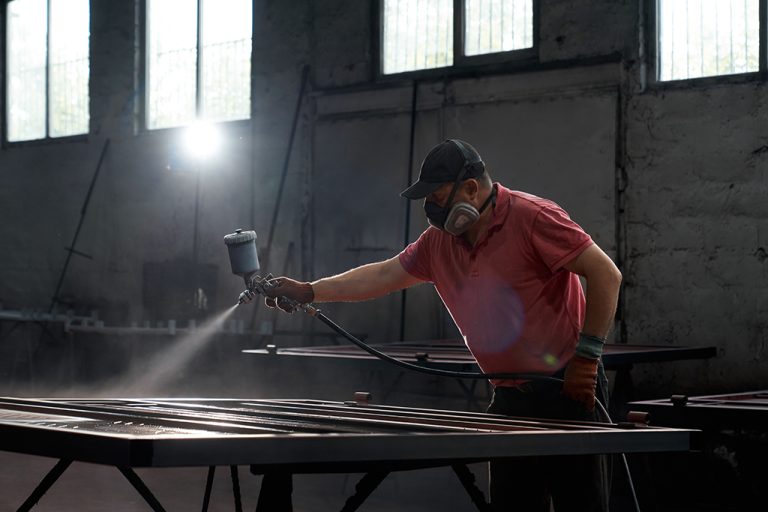
The success of any industrial coating system is determined well before the final powder coat or paint is applied. Proper surface preparation is the foundation of performance. Without it, coatings are prone to poor adhesion, premature corrosion, and early failure. Among the most widely used pretreatment processes, zinc phosphating and iron phosphating remain essential for creating reliable adhesion and extending the life of coated steel and aluminum parts.
Choosing between zinc and iron phosphating is not always straightforward. Each method brings unique benefits, costs, and applications. For fabricators and manufacturers across sectors like automotive, agricultural, heavy machinery, and architectural components, understanding how these pretreatments work—and how they integrate with mechanical cleaning steps such as sand blasting—is critical for ensuring long-term coating performance.
This guide provides a detailed comparison of zinc and iron phosphating, explores their advantages, and explains why professional surface preparation services are essential for achieving durable results.
What Is Phosphating in Surface Preparation?
Phosphating is a chemical conversion process applied to metal surfaces during paint surface preparation. The process involves treating the substrate with a phosphate solution that reacts with the surface to form an insoluble, crystalline or amorphous phosphate layer.
This phosphate layer improves coating performance in several ways:
- Creates a textured, adhesive surface that improves bonding between the substrate and coating.
- Provides corrosion resistance by creating a barrier between the metal and the environment.
- Enhances uniformity for consistent application of powder coating.
- Extends product lifespan by reducing the risk of premature coating breakdown.
While mechanical methods, such as abrasive blasting, clean and profile the surface, phosphating adds a chemical layer of protection and adhesion. Together, they create the strongest possible base for coatings.
Zinc Phosphating – Heavy-Duty Protection
Zinc phosphating is the preferred choice when durability and corrosion resistance are the top priorities. This method creates a dense, microcrystalline layer on the substrate that offers superior protection.
Key Benefits of Zinc Phosphating:
- Corrosion Resistance: Provides outstanding protection for parts exposed to harsh weather, chemicals, or salt.
- Durable Adhesion: The crystalline layer ensures strong mechanical and chemical bonding for coatings.
- Compatibility with Powder Coatings: Especially effective when paired with high-performance powder coatings for long-lasting results.
- Extended Service Life: Reduces the risk of coating failures, saving time and maintenance costs over the product’s lifecycle.
Zinc phosphating is widely used in the automotive industry, defence applications, and heavy equipment manufacturing, where environmental exposure is unavoidable.
Iron Phosphating – Cost-Effective Versatility
Iron phosphating is a simpler and more economical alternative. Instead of forming a crystalline structure, it produces a thin, amorphous phosphate layer that still improves adhesion and offers moderate corrosion resistance.
Key Benefits of Iron Phosphating:
- Lower Costs: The process requires less equipment and lower energy consumption compared to zinc.
- Streamlined Operation: Easier to maintain and integrate into production lines.
- Energy Efficiency: Operates at lower bath temperatures, reducing utility expenses.
- Sufficient Adhesion for Indoor Use: Ideal for products exposed to limited corrosion risks, such as office furniture, appliances, or indoor fixtures.
Iron phosphating is best suited for high-volume production where cost control is essential, and exposure conditions are less demanding.
Key Differences Between Zinc and Iron Phosphating
While both processes improve coating adhesion and performance, they differ significantly in durability, cost, and application.
|
Factor |
Zinc Phosphating | Iron Phosphating |
|
Layer Structure |
Thick, crystalline |
Thin, amorphous layer |
|
Corrosion Resistance |
High – best for harsh conditions |
Moderate – best for indoor or light-duty applications |
|
Durability |
Long-term, heavy-duty |
Lower and more economical |
|
Cost |
Higher |
Operates at milder conditions |
| Industries | Automotive, defence, heavy machinery |
Appliances and indoor goods |
This comparison highlights why zinc phosphating dominates in outdoor and heavy-duty applications, while iron phosphating serves as a practical solution for cost-sensitive, controlled environments.
The Role of Mechanical Cleaning and Sand Blasting Before Phosphating
Phosphating cannot deliver its full benefits unless the surface is thoroughly cleaned first. Oils, rust, mill scale, and previous coatings interfere with the chemical reaction and compromise adhesion.
Mechanical cleaning methods such as abrasive brushing, grinding, or sanding are often used to prepare surfaces. However, sand blasting remains one of the most effective approaches for creating a clean, profiled surface. By propelling abrasive media at high velocity, sand blasting removes rust, contaminants, and old coatings while creating the ideal surface profile for phosphate adhesion.
In practice, mechanical cleaning and phosphating work hand-in-hand:
- Sand blasting ensures physical cleanliness and surface profiling.
- Phosphating provides chemical bonding and corrosion resistance.
Skipping mechanical cleaning reduces the effectiveness of phosphating, while relying solely on mechanical cleaning without chemical conversion limits long-term protection. Combining both ensures coatings adhere properly and last longer.
Also read: https://www.professionalpowdercoating.ca/when-to-use-chemical-vs-mechanical-metal-stripping-methods/
Which Method Delivers Better Coating Performance?
Performance depends on the environment and product use:
- Zinc Phosphating is unmatched in providing long-term corrosion resistance and durability. It is the preferred choice for outdoor structures, vehicles, and equipment exposed to harsh or corrosive environments.
- Iron Phosphating is more suited for cost-sensitive projects in low-corrosion environments. It offers adequate adhesion and moderate protection for indoor applications, but does not deliver the same longevity under heavy exposure.
Ultimately, the “better” method is not universal—it depends on whether durability or cost efficiency is the greater priority.
Why Professional Applicators Make the Difference
Both zinc and iron phosphating require precise control over bath chemistry, temperature, and application time. Without professional oversight, coatings may suffer from uneven phosphate layers, poor adhesion, or contamination.
Professional applicators such as Professional Powder Coating provide:
- Integrated surface preparation services that combine mechanical cleaning, sand blasting, and phosphating.
- Quality assurance through controlled processes and compliance with industry standards.
- Experience in selecting the right pretreatment method for each application.
- Seamless transition from pretreatment to powder coating for consistent results.
By entrusting pretreatment to a qualified provider, businesses avoid costly rework, reduce downtime, and ensure coatings perform as expected.
Choosing the Right Pretreatment for Lasting Results
Adequate paint surface preparation is essential for reliable coating performance. Zinc phosphating provides heavy-duty protection for challenging environments, while iron phosphating offers a cost-effective solution for controlled, indoor applications. Both play a critical role in ensuring coatings adhere properly and last longer.
The foundation of performance, however, lies in the combination of mechanical cleaning, sand blasting, and phosphating. Together, these steps create the optimal surface for coatings to bond and endure.
For projects requiring consistent, high-quality results, partner with Professional Powder Coating. With proven experience in surface preparation, phosphating, and powder coating, Professional Powder Coating ensures coatings achieve durability, corrosion resistance, and compliance. Contact Professional Powder Coating today to discuss tailored solutions that protect valuable assets and deliver long-term performance.
Also read:
How Crucial is Industrial Sandblasting in Extending Coating Lifespan?