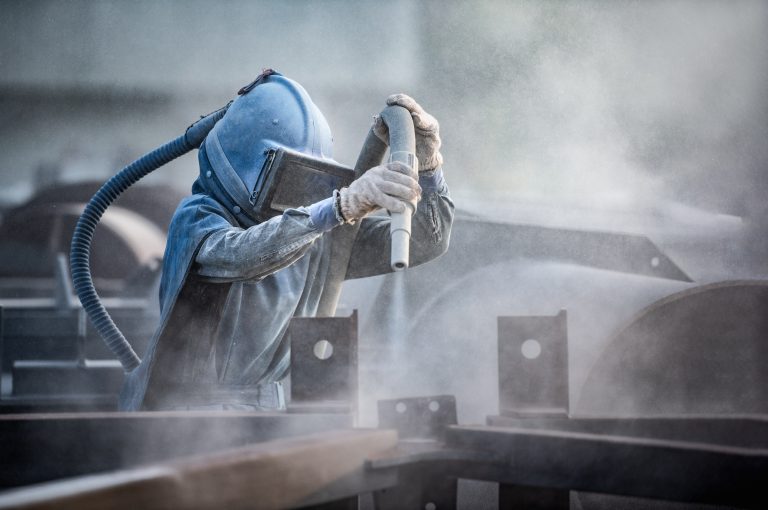
Industrial coating performance begins long before a primer or finish is applied. Every durable coating system is built on proper surface preparation—and that process depends heavily on sand blasting services that follow rigorous international and national standards. These standards define how metal surfaces should be cleaned, profiled, inspected, and prepared before any form of coating work begins.
Across manufacturing, construction, fabrication, transportation, and energy sectors, consistent surface preparation is the backbone of coating longevity. Facilities that rely on blasting services, abrasive blasting, or specialized techniques such as aluminum oxide blasting must understand how SSPC and ISO standards define acceptable surface preparation. These standards help prevent coating failures, corrosion, structural breakdowns, and costly rework.
The Purpose of Standards in Commercial Sandblasting
Standards exist to ensure uniformity, reliability, and safety. Without a shared framework, every blasting job would be based on interpretation rather than measurable criteria. SSPC and ISO standards play a critical role by providing:
- Clear definitions of surface cleanliness levels
- Consistent expectations for profile depth and blast quality
- Visual guides to compare actual surfaces against accepted benchmarks
- A compliance-based approach to surface preparation
The goal is consistent quality, not just visually clean metal, but metal prepared to achieve proper coating adhesion, corrosion resistance, and long-term durability.
Overview of SSPC Standards — The U.S. Framework for Surface Preparation
The SSPC (Society for Protective Coatings) established one of the most widely used sets of guidelines for surface preparation. These standards are used extensively throughout North America and apply to industrial fabrication, steel structures, heavy equipment, marine environments, bridges, storage tanks, and pipeline infrastructure.
Key components of SSPC standards include:
- Surface cleanliness classifications (SP standards)
- Profile depth parameters
- Requirements for methods such as water blasting, dry blasting, and wet abrasive blasting
- Inspection procedures for verifying cleaning levels
SSPC standards create a measurable baseline for industrial blasting operations. They also integrate with coating manufacturer requirements to ensure that protective systems perform as expected.
What SSPC-SP6 (Commercial Blast Cleaning) Requires
SSPC-SP6 is widely referenced in industrial contracts and coating specifications. It defines the minimum level of cleanliness required for “commercial-grade” blast cleaning.
Key expectations include:
- All visible oil, grease, rust, mill scale, coatings, and corrosion products removed
- Only light shadows, streaks, or staining permitted
- Uniform surface profile that meets coating manufacturer recommendations
- Acceptable staining not to exceed 33% of each square inch of surface
SP6 strikes the balance between thorough cleaning and cost-efficiency. It delivers a surface suitable for many industrial coating systems, including powder coatings, epoxy primers, zinc-rich coatings, and corrosion-protection systems.
Overview of ISO Standards — The Global Benchmark for Blasting Quality
ISO standards define surface cleanliness and preparation requirements used throughout Europe, Asia, the Middle East, and global manufacturing supply chains. ISO 8501-1 is the most recognized standard, explaining surface conditions before and after blasting.
ISO standards classify levels of cleaning, such as:
- Sa 1 – Light blast cleaning
- Sa 2 – Thorough blast cleaning
- Sa 2.5 – Very thorough blast cleaning
- Sa 3 – Blast cleaning to visually clean steel
ISO standards rely heavily on visual comparison pictures to ensure consistency across global operations and multilingual industrial teams.
ISO also defines:
- Surface roughness standards (ISO 8503)
- Cleanliness grades before coating application
- Rusting conditions before blasting
These standards ensure that surface preparation quality remains consistent regardless of region or contractor.
SSPC vs. ISO: What’s the Difference?
Although both frameworks define surface preparation quality, their approach differs:
|
Aspect |
SSPC |
ISO |
|
Geography |
Primarily, the U.S. and North America |
International |
|
Format |
Text-based standards with some visual references |
Highly visual standards |
|
Terminology |
“SP” levels (SP6, SP10, etc.) |
“Sa” levels (Sa 2, Sa 2.5, etc.) |
| Focus | Detailed process requirements |
Consistent results through visual clarity |
Both systems can be used interchangeably, depending on contract requirements or project location. Many global projects reference both frameworks to unify expectations across suppliers, inspectors, and contractors.
Why Compliance with SSPC and ISO Matters
Non-compliance often leads to costly coating failures—issues that may not appear immediately but will surface as rust, blistering, peeling, cracking, or delamination. Adhering to SSPC and ISO standards ensures:
- Reliable adhesion between coating and substrate
- Reduced corrosion, particularly in high-moisture and chemical environments
- Predictable long-term coating performance
- Lower maintenance and repair frequency
- Enhanced safety for critical structures
Industries that rely on structural steel, electrical equipment, pipelines, and heavy machinery depend on these standards to protect assets worth millions.
How Professionals Ensure SSPC/ISO Compliance
Certified blasting providers rely on a systematic process to ensure consistent adherence to standards. This process typically includes:
1. Surface Evaluation Before Blasting: Inspectors identify rust grades, contaminants, mill scale, and previous coatings.
2. Selecting Appropriate Blasting Media
Options include:
- Steel grit
- Garnet
- Glass bead
- Slag-based media
- Aluminum Oxide Blasting for high-precision applications
The media chosen influences the profile depth, speed of cleaning, and final surface quality.
3. Setting Blasting Pressure and Technique Controls: Pressure levels, nozzle angle, nozzle distance, and blasting speed directly impact final results.
4. Ensuring Environmental Controls: Humidity, surface temperature, and dew point are continuously monitored.
5. Using Visual Standards and Surface Comparators: Technicians compare surfaces to official SSPC and ISO reference plates and photos.
6. Measuring Surface Profile Depth: Devices such as needle gauges and surface comparators verify profile ranges.
7. Post-Blast Cleaning and Verification: Dust residues, abrasives, and contaminants must be removed to meet coating specifications.
8. Documenting Results for Quality Assurance: Inspection reports ensure full compliance and traceability for future audits.
Real-World Applications of Standards in Different Industries
Standards guide surface preparation in numerous sectors:
1. Infrastructure and Construction: Bridges, water tanks, tunnels, and structural steel rely on SSPC and ISO standards for corrosion protection.
2. Oil, Gas, and Chemical Processing: Pipelines, vessels, and refineries require surface preparation accuracy to withstand harsh environments.
3. Manufacturing and Fabrication: Metal components, machinery frames, and OEM-manufactured parts rely on consistent blasting standards.
4. Marine and Shipbuilding: Saltwater exposure makes precise blasting essential for corrosion control.
5. Power Generation and Transmission: Busbar coatings, electrical enclosures, and substation equipment depend on well-prepared surfaces.
6. Automotive, Rail, and Heavy Equipment: Coatings must adhere reliably despite constant vibration, abrasion, and weather exposure. Standards ensure consistency across all sectors—no matter the operational conditions.
To learn more about how sandblasting improves industrial metal surfaces, read our blog here.
Partnering with Certified Sandblasting Service Providers
Certified professionals bring:
- Knowledge of SSPC and ISO technical requirements
- Access to industrial-grade blasting equipment
- Ability to perform dry blasting, wet abrasive blasting, shot blasting, and specialized techniques
- Understanding of appropriate media for each metal type
- Experience with profile control for powder coating, epoxy systems, and industrial finishes
Choosing skilled providers ensures performance and protects industrial assets for the long term.
Standards Are the Foundation of Quality Surface Preparation
Reliable coating performance depends heavily on consistent surface preparation guided by measurable, internationally recognized standards. SSPC and ISO frameworks define how metal surfaces should be cleaned, profiled, inspected, and verified to ensure long-term coating adhesion and corrosion protection.
Professional Powder Coating delivers SSPC- and ISO-compliant surface preparation through industry-grade sand blasting services, abrasive blasting, and aluminum oxide blasting methods. Contact us today for reliable, high-quality commercial sand blasting solutions engineered to meet strict industrial standards.