 Skip to main content Skip to footer
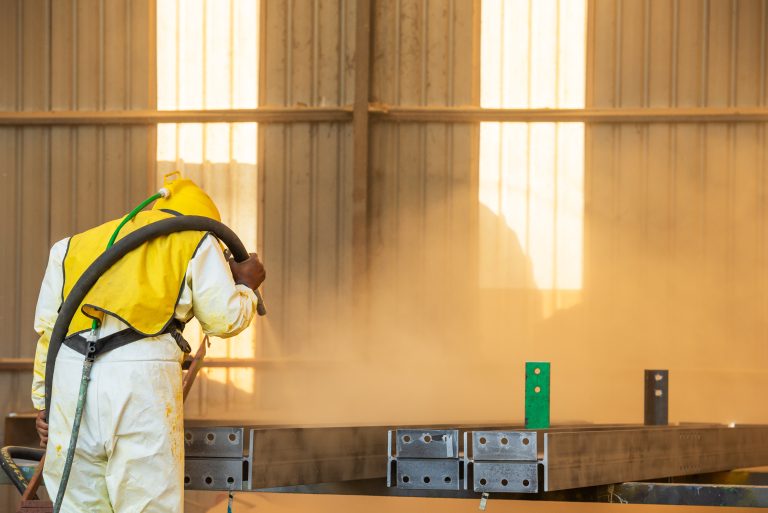
Industrial and commercial facilities across Pennsylvania operate in environments where steel, concrete, and equipment surfaces are constantly exposed to contaminants. From manufacturing floors to outdoor structural assets, these contaminants gradually compromise surface integrity and coating performance. This is why sandblasting services play a critical role in maintaining asset reliability, safety, and long-term corrosion protection.
Without thorough surface cleaning, coatings and protective systems struggle to bond effectively, leading to premature failures and increased maintenance costs. Professional sandblasting offers a controlled, proven method for removing stubborn contaminants and preparing surfaces for high-performance coatings across a wide range of industries.
Understanding Surface Contaminants and Their Impact on Coating Performance
Surface contaminants act as barriers between substrates and protective coatings. Even microscopic residues can interfere with adhesion, allowing moisture and corrosive agents to penetrate beneath the coating. Over time, this results in blistering, delamination, and accelerated corrosion, especially in demanding industrial environments.
1. Rust and Mill Scale: The Most Widespread Contaminants in Pennsylvania Industrial Sites
Rust and mill scale are among the most common contaminants found on steel surfaces throughout Pennsylvania facilities. Exposure to humidity, temperature swings, and industrial pollutants accelerates oxidation, particularly in older infrastructure.
Sandblasting removes rust and mill scale efficiently by stripping corrosion from the surface, leaving clean metal, while creating an anchor profile that supports long-term coating adhesion.
2. Oil, Grease, and Hydrocarbon Residues in Manufacturing and Maintenance Facilities
Manufacturing plants, processing facilities, and maintenance shops frequently accumulate oils, greases, and hydrocarbon residues. These contaminants often bond tightly to surfaces and resist traditional cleaning methods.
Professional sandblasting systems, combined with proper pre-cleaning protocols, eliminate embedded residues and restore surfaces to a condition suitable for coating application.
3. Paint, Powder Coating, and Thick Industrial Coating Build-Up
Over time, multiple layers of paint or industrial coatings can build up on equipment and structural components. These layers often crack or separate unevenly, creating hidden corrosion pockets.
Sandblasting safely removes old coatings without damaging the underlying substrate, making it an essential process for refurbishment and recoating projects handled by sandblasting services in Pittsburgh and other industrial hubs.
4. Environmental Contaminants: Dirt, Dust, and Airborne Particulates in High-Traffic Facilities
Facilities with heavy vehicle movement or material handling operations experience constant exposure to airborne particulates. These contaminants settle on surfaces and reduce coating adhesion if not adequately removed.
Sandblasting provides deep cleaning, removing embedded dirt and dust from surface pores, ensuring uniform coating performance.
5. Mineral Deposits and Corrosive Salts Affecting Outdoor Steel Structures
Outdoor assets such as structural steel, tanks, and supports often accumulate mineral deposits and corrosive salts. These contaminants attract moisture and accelerate corrosion, particularly in regions with variable weather conditions.
Controlled abrasive blasting removes these deposits thoroughly, reducing the risk of under-film corrosion after coating.
6. Weld Slag, Spatter, and Heat Tint in Fabrication Shops
Fabrication environments generate weld slag, spatter, and heat tint that interfere with coating adhesion. These by-products are challenging to remove solely by mechanical methods.
Sandblasting cleans weld zones uniformly, preparing fabricated components for protective coatings without compromising dimensional accuracy.
7. Concrete Surface Contaminants: Sealers, Adhesives, and Industrial Stains
Concrete surfaces in industrial facilities often contain sealers, adhesives, and chemical stains. These contaminants reduce bonding strength for coatings or overlays.
Abrasive blasting restores concrete surfaces by removing contaminants and creating a clean, textured profile suitable for industrial applications.
Also read: Industrial-Grade Clean: 5 Surfaces You Didn’t Know Needed Sand Blasting
How Professional Sandblasting Ensures Safe and Effective Contaminant Removal
Professional sandblasting operations use carefully selected abrasive media, containment systems, and dust-control measures to ensure safe, consistent results. Proper process control protects surrounding equipment while delivering predictable surface preparation outcomes, whether supporting sandblasting services in Philadelphia or statewide industrial projects.
Benefits of Sandblasting for Long-Term Asset Integrity
Sandblasting improves coating adhesion, extends asset service life, reduces maintenance cycles, and supports compliance with industry standards. Its versatility makes it suitable for steel, concrete, and mixed-material environments across multiple industries.
To know more about how sandblasting improves industrial metal surfaces, read our blog here.
Reliable Surface Preparation for Pennsylvania Facilities
Surface contaminants pose a serious threat to coating performance and asset longevity if left unaddressed. Professional sandblasting remains the most effective method for safely and consistently removing these contaminants across industrial environments.
Professional Powder Coating delivers dependable surface preparation solutions that support durable coatings and long-term corrosion protection. Connect with the team today to discuss sandblasting strategies tailored to Pennsylvania facilities and demanding industrial applications.
