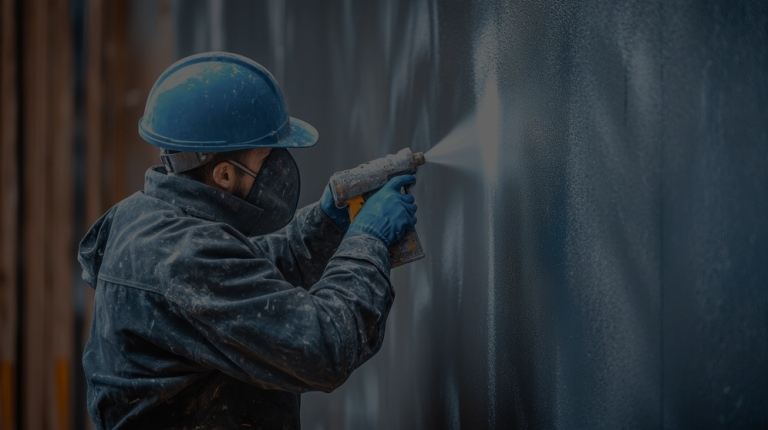
Metal paint stripping is a controlled industrial process used to remove existing coatings, corrosion, and embedded contaminants from metal substrates before reapplication. For industrial assets, this process is not optional. It directly determines coating adhesion, corrosion resistance, and long-term performance.
Coating systems consistently fail when contaminants remain trapped beneath the surface. Improper preparation leads to underfilm corrosion, delamination, and shortened service life. Industrial studies and field performance data show that properly prepared substrates significantly extend coating lifespan by improving mechanical bonding and reducing the initiation of corrosion.
People Also Ask
What is metal paint stripping used for
It removes coatings, corrosion, and contaminants to prepare metal surfaces for recoating and improve adhesion and durability.
Which stripping method is best for industrial applications?
The best method depends on substrate type and coating system. Abrasive blasting is common for steel, while chemical stripping is used for delicate or complex components.
Does metal paint stripping reduce corrosion risk?
Yes. Proper stripping removes contaminants that cause underfilm corrosion and improves coating adhesion, reducing long-term corrosion risk.
Defining the Core Restoration Process
Metal paint stripping is not an aggressive removal. It is a controlled restoration process designed to:
- Eliminate old coatings, rust, and mill scale
- Remove embedded contaminants such as oils and chlorides
- Preserve substrate integrity and dimensional accuracy
- Establish a clean surface ready for coating adhesion
At Professional Powder Coating, stripping is integrated with SSPC-compliant blasting and automated coating workflows to ensure measurable preparation outcomes across industrial components.
The Cost-Benefit of Refurbishment Versus Replacement
Industrial decision-makers often evaluate whether to replace or refurbish assets. In high-value sectors such as aerospace, energy infrastructure, and heavy equipment and machinery, stripping-based refurbishment offers a clear advantage.
Benefits include
- Reduced capital expenditure compared to replacement
- Minimized operational downtime
- Extended lifecycle performance through engineered recoating
Coating failures often originate from poor preparation rather than material limitations. Controlled stripping eliminates this risk and supports predictable performance across asset lifecycles.
How Do Different Metal Paint Stripping Methods Compare?
Selecting the correct stripping method requires evaluating substrate type, coating composition, and performance requirements. Industrial environments demand standards-driven stripping workflows rather than general removal techniques.
Need a specification-driven recommendation? Professional Powder Coating provides technical consultations to evaluate substrate conditions, coating systems, and optimal stripping methods for industrial projects.
Chemical Stripping for Intricate Components
Chemical stripping uses controlled solvent systems to dissolve coatings without mechanical impact. This method is critical for:
- Aluminum and non-ferrous substrates
- Precision assemblies and tight-tolerance components
- Complex geometries where blasting access is limited
Professional Powder Coating offers in-house, patented stripping processes designed to safely remove coatings while preserving the integrity of the substrate on sensitive industrial parts.
Thermal and Mechanical Approaches
Thermal and mechanical stripping methods are widely used for heavy industrial applications.
- Thermal stripping uses controlled heat to break down coatings without damaging the substrate when properly calibrated
- Abrasive blasting removes coatings while creating a measurable anchor profile
- Cryogenic processes embrittle coatings for efficient removal in heavy-duty steel applications
SSPC-compliant abrasive blasting remains a critical step in industrial workflows because it removes both visible and embedded contaminants while establishing a consistent surface profile for coating adhesion.
How to Choose the Right Metal Stripping Process for Your Substrate
Selecting the appropriate stripping method requires a structured evaluation framework based on material behavior, coating type, and environmental exposure.
Assessing Substrate Sensitivity and Gauge
Different substrates respond differently to stripping methods.
- Ferrous metals typically tolerate abrasive and thermal methods
- Non-ferrous metals such as aluminum require controlled chemical or low-impact processes
- Thin-gauge materials require strict thermal limits to prevent distortion
Industrial processing lead times vary based on size and complexity. Small components may be processed within hours, while large structural assemblies or long industrial parts may require coordinated batch workflows.
Evaluating Coating Thickness and Type
Coating composition directly influences stripping strategy.
- Epoxies and polyurethane coatings require aggressive or chemical removal
- Powder coatings often require thermal or abrasive stripping
- Multi-layer coatings require staged removal processes
Matching the stripping method to coating type ensures efficient removal while maintaining substrate performance.
What Are the Environmental and Compliance Standards for Paint-Stripping Services
Industrial stripping must align with environmental regulations and compliance standards while maintaining performance outcomes.
Managing Chemical Byproducts and Waste
Professional stripping facilities implement controlled waste management protocols that include:
- Containment and safe disposal of chemical byproducts
- Reduction of hazardous waste through process optimization
- Compliance with environmental and regulatory standards
These practices reduce environmental impact while maintaining industrial efficiency.
Post Stripping Substrate Protection
After stripping, metal surfaces become highly reactive and vulnerable to corrosion.
Controlled protection measures include
- Passivation processes to stabilize the surface
- Temporary corrosion inhibitors
- Coordinated workflow between stripping and coating
Integrated facilities, such as Professional Powder Coating, reduce the risk of contamination by minimizing delays between preparation and coating application.
How Can You Optimize Metal Paint Stripping for High-Value Refurbishment
Optimizing stripping processes improves coating adhesion, reduces corrosion risk, and enhances lifecycle performance.
Scaling for Batch Processing and Logistics
Industrial operations require the ability to efficiently process large, heavy, and long components.
Professional Powder Coating provides
- Large-scale stripping and blasting capacity
- Handling systems for heavy equipment and machinery
- Batch processing workflows for high-volume projects
This capability ensures consistent preparation across all components, regardless of size or complexity.
Partnering With Specialized Restoration Experts
Industrial stripping requires more than basic removal. It requires engineered surface preparation integrated with coating systems.
Professional Powder Coating delivers
- In-house stripping and refurbishing capabilities
- SSPC-compliant blasting processes
- Automated coating systems for consistent film application
- Compliance with ASTM standards and alignment with UL, CSA, and NEMA requirements where applicable
This integrated approach ensures measurable improvements in coating adhesion and corrosion resistance.
Conclusion
Selecting the right paint stripping services is a critical decision that directly impacts coating durability, corrosion resistance, and lifecycle cost.
Metal stripping is not simply a removal process. It is the foundation of industrial surface preparation, determining whether coatings succeed or fail. Without controlled stripping and standards-driven preparation, even advanced coating systems cannot perform as intended.
Professional Powder Coating provides engineered stripping, blasting, and coating solutions designed for industrial environments. With in-house patented stripping processes, SSPC-compliant preparation, and integrated coating systems, every project is executed with measurable precision.
Request a project consultation today to evaluate the right stripping and surface preparation strategy for your industrial assets.