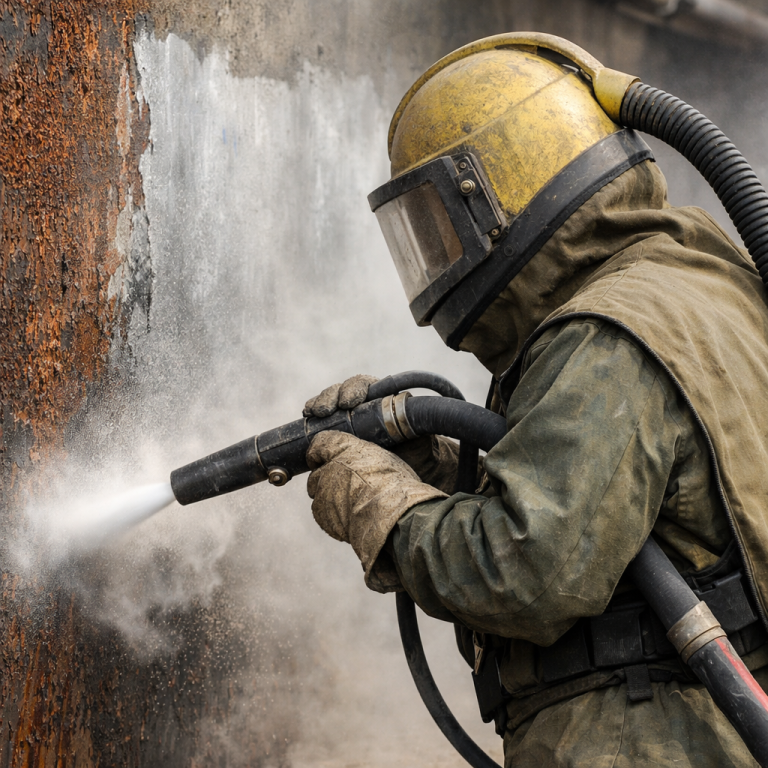
Surface preparation plays a defining role in coating performance, corrosion resistance, and long-term asset reliability. In industrial environments, sand blasting remains one of the most effective methods for removing rust, mill scale, coatings, and embedded contaminants from metal and concrete surfaces. The effectiveness of this process, however, depends heavily on the abrasive material selected.
Abrasive media are not interchangeable. Each material delivers different cutting characteristics, surface profiles, and operational outcomes. Understanding how common abrasive blasting materials perform allows industrial operations to achieve consistent results while controlling costs, safety, and coating quality.
People Also Ask
1. How do professionals choose the right abrasive blasting material for industrial projects?
Professional abrasive blasting providers evaluate substrate type, corrosion severity, coating system requirements, and applicable SSPC and ASTM standards before selecting abrasive media. This ensures the surface profile supports proper coating adhesion, corrosion resistance, and long-term performance.
2. Why is abrasive blasting critical before applying industrial coatings?
Abrasive blasting removes contaminants and creates a controlled surface profile that enables mechanical bonding of coatings. When performed to SSPC cleanliness levels, it significantly improves coating durability, reduces premature failure, and extends asset service life.
Understanding Abrasive Blasting Media
Abrasive blasting media are materials propelled at high velocity to impact and clean a surface. The media remove contaminants through cutting, fracturing, or peening actions depending on their shape, hardness, and density. Media selection determines how aggressively a surface is cleaned, how much material is removed, and what type of surface profile is created.
In professional industrial environments, abrasive blasting is performed in accordance with SSPC surface preparation standards and applicable ASTM specifications to ensure coating-ready surfaces and repeatable results.
Professional sand blasting services evaluate substrate material, contamination level, coating specifications, and operating conditions before selecting the appropriate abrasive.
Key Factors That Influence Abrasive Media Performance
Several factors influence how an abrasive performs during blasting operations:
- Hardness: Determines cutting ability and speed
- Shape: Angular media cut aggressively, while round media peen surfaces
- Density: Affects impact energy and cleaning efficiency
- Recyclability: Influences cost-effectiveness and waste generation
- Dust generation: Impacts visibility, safety, and environmental controls
Balancing these factors ensures surfaces are prepared correctly without unnecessary material loss or surface damage.
Common Abrasive Blasting Materials and Their Benefits
- Aluminum Oxide: Aluminum oxide is a sharp, angular abrasive known for fast cutting action and consistent performance. It is highly effective for removing tough coatings and corrosion while producing a uniform anchor profile. Its durability allows multiple reuse cycles in controlled environments.
- Steel Grit and Steel Shot: Steel grit delivers aggressive cutting power for heavy rust, mill scale, and thick coatings. It produces a deep surface profile suitable for industrial coatings. Steel shot, with its round shape, is used for peening and surface strengthening rather than aggressive removal.
- Garnet: Garnet offers effective cutting with lower dust generation compared to some alternatives. Its natural hardness and sharp edges make it suitable for applications that require high-quality surface preparation, improved visibility, and environmental control.
- Glass Bead: Glass bead blasting cleans surfaces without significant material removal. It produces smooth, uniform finishes and is commonly used for stainless steel, aluminum, and components where dimensional control or appearance is important.
- Coal Slag and Mineral Slag: These media provide strong cutting performance at a lower cost, making them suitable for large-scale industrial projects. They are commonly used for removing rust and coatings from structural steel where media recovery is not required.
Comparing Abrasive Media Performance by Application
Heavy corrosion removal and structural steel preparation typically require aggressive, angular media such as steel grit or aluminum oxide. Precision components and cosmetic finishes benefit from glass bead blasting. Large outdoor structures and infrastructure projects often use mineral slag or garnet for efficient, cost-effective cleaning.
Matching abrasive media to the application ensures surfaces meet SSPC cleanliness levels and coating manufacturer specifications without unnecessary rework.
How Abrasive Choice Affects Coating Adhesion and Longevity
The surface profile created during abrasive blasting directly affects coating adhesion. Insufficient profile depth can lead to poor bonding, while excessive roughness may trap contaminants or reduce coating coverage.
Proper abrasive selection supports mechanical bonding, improves coating uniformity, and enhances long-term corrosion resistance in accordance with ASTM and SSPC requirements. This directly contributes to extended service life and reduced maintenance cycles.
Operational Considerations When Selecting Abrasive Materials
Operational factors play a critical role in media selection. Media recyclability affects long-term costs, while dust generation influences containment and safety requirements. Equipment compatibility, disposal regulations, and production timelines must also be considered when planning blasting operations.
Common Mistakes When Choosing Abrasive Blasting Materials
Common errors include selecting media based solely on cost, ignoring substrate sensitivity, and failing to consider coating specifications. These mistakes often result in inconsistent surface preparation, premature coating failure, and increased maintenance costs.
When Professional Abrasive Blasting Expertise Makes the Difference
Professional blasting providers evaluate all project variables before selecting abrasive materials. Experience ensures the correct balance between cleaning efficiency, surface profile, safety, and coating performance, outcomes that are difficult to achieve through trial-and-error approaches.
Choosing the Right Abrasive Material for Optimal Blasting Results
Abrasive selection is a critical decision in any industrial surface preparation process. The right media ensures efficient contaminant removal, proper surface profiling, and coatings that perform reliably over time.
Professional Powder Coating integrates abrasive blasting into a controlled, standards-driven workflow, aligning media selection with SSPC surface preparation requirements and ASTM-compliant coating systems.
Unlike generic blasting providers, Professional Powder Coating focuses on preparing surfaces to support durable coatings, corrosion resistance, and long-term asset reliability.
Connect with the team today to discuss abrasive blasting strategies that support consistent coating performance and extended service life.
Also read: The Role of Abrasive Blasting in Rust Removal and Corrosion Protection