Corrosion is not simply surface discoloration. It is a progressive electrochemical process that weakens steel, shortens asset lifespan, and increases maintenance costs across industrial, marine, infrastructure, and energy sectors. Once oxidation begins, it can spread beneath protective films, compromising structural reliability. For facilities managing heavy equipment, structural frameworks, or exposed steel assemblies, coating selection becomes a long-term operational decision.
Protective systems are often described broadly as rust prevention solutions, yet important differences exist between traditional liquid-based products and engineered powder systems. Understanding how each approach performs under stress is essential when selecting a corrosion resistant powder coating for demanding environments.
People Also Ask
1. Is rust the same as corrosion?
Rust is a specific form of corrosion that affects iron and steel. Corrosion is a broader term that includes various forms of material degradation caused by chemical reactions.
2. Why does powder coating last longer in harsh environments?
Powder coatings form a dense, cross-linked film that resists moisture intrusion, impact, and chemical exposure, which improves long-term durability.
What Is an Anti Rust Coating?
An anti rust coating is typically a liquid-applied system designed to inhibit oxidation on ferrous metals. These coatings often contain corrosion-inhibiting pigments such as zinc compounds or other additives that slow the chemical reaction between steel, oxygen, and moisture.
Anti rust products are frequently used as primers within multi-layer coating systems or as standalone maintenance solutions in field environments. They can provide immediate surface protection and are commonly selected for quick repairs or localized applications where portability and ease of application are important.
However, performance depends heavily on the integrity of the film. If the coating is scratched, chipped, or applied too thin, corrosion can initiate at exposed points. In high-impact or chemically aggressive environments, periodic inspection and reapplication are often required to maintain protection.
While anti rust systems remain practical in certain conditions, their long-term durability varies depending on exposure severity and maintenance discipline.
What Is Corrosion-Resistant Powder Coating?
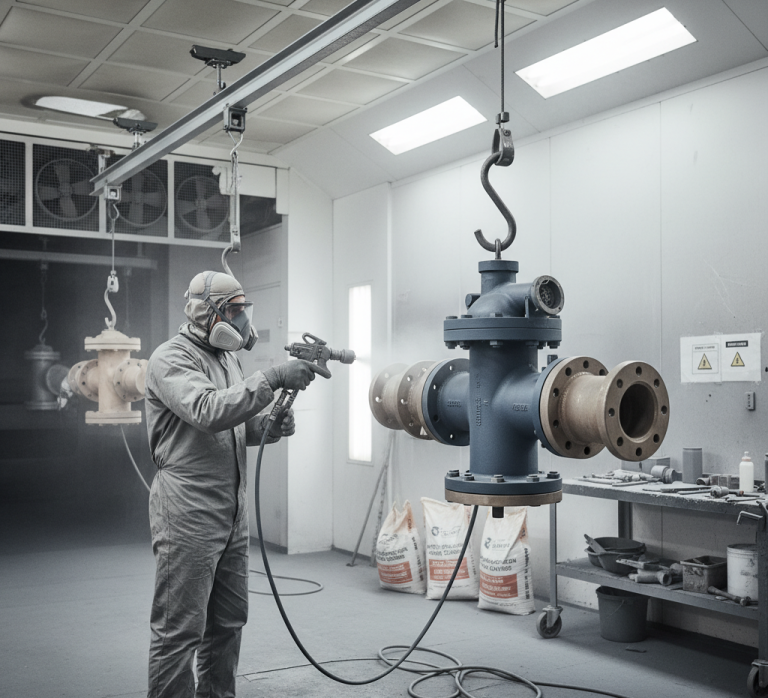
Corrosion-resistant powder coating represents a different technology and application method. Powder coatings consist of dry, electrostatically charged particles applied to grounded metal components. After application, the coated parts are cured in a controlled oven environment, where the powder melts and chemically cross-links into a continuous protective film.
This curing process produces a dense and uniform coating with minimal porosity. Unlike solvent-based liquids, powder coatings do not rely on evaporation to form a film. The result is consistent thickness and improved structural cohesion.
When applied over properly prepared substrates, powder systems provide a robust corrosion protection coating barrier against moisture intrusion, UV exposure, and mechanical wear. Their film integrity and impact resistance often make them suitable for heavy industrial, architectural, and marine applications.
Performance Differences in Real-World Conditions
In controlled indoor settings, both anti-rust and powder coatings may perform adequately. The contrast becomes more evident under environmental stress.
Industrial facilities expose steel components to humidity, temperature fluctuations, vibration, and chemical contact. In coastal regions, salt contamination accelerates corrosion. In energy installations, temperature cycling and mechanical stress challenge coating adhesion.
Liquid anti-rust coatings can degrade more quickly when exposed to repeated abrasion or ultraviolet radiation. Edge chipping and surface damage allow moisture to penetrate beneath the film. Once corrosion begins under the coating, it spreads laterally, weakening adhesion.
Powder coatings typically offer greater impact and abrasion resistance due to their cross-linked structure. Their uniform thickness reduces thin spots that can become corrosion initiation points. In exterior architectural applications and industrial environments, powder systems often demonstrate longer maintenance intervals.
Adhesion, Surface Preparation, and Failure Risk
Adhesion plays a critical role in coating longevity. Both anti-rust coatings and powder systems require proper surface preparation to perform effectively. Contaminants such as oil, mill scale, and rust must be removed before application.
Powder coatings benefit from SSPC-compliant abrasive blasting that creates a defined anchor profile. This textured surface allows the coating to mechanically bond to the substrate. Strong mechanical adhesion reduces the risk of peeling and delamination.
Liquid anti-rust coatings may adhere adequately under proper preparation, but they can be more sensitive to environmental variables during curing. High humidity or improper drying conditions can compromise film formation.
Failure risk increases significantly when preparation standards are not met. Controlled blasting, inspection, and curing procedures are essential for both systems, though powder coatings often provide greater resilience under consistent process control.
Durability, Maintenance, and Lifecycle Costs
Anti-rust coatings may require periodic touch-ups, especially in areas exposed to mechanical wear. Surface damage often necessitates spot repairs or full recoating over time. Maintenance schedules can become more frequent in harsh industrial or marine conditions.
Corrosion-resistant powder coating generally offers improved durability due to a thicker film build and enhanced impact resistance. Reduced frequency of maintenance and recoating lowers labor costs and operational downtime.
For large industrial structures or equipment, longer service intervals translate into measurable cost savings over the asset’s lifespan.
When Each Coating Approach Makes Sense
Anti-rust coatings are often suitable for maintenance programs, field repairs, interior steel components, or environments with limited exposure to moisture and chemicals. Their flexibility and ease of application make them practical in certain scenarios.
Powder coatings are frequently preferred for structural steel, heavy equipment and machinery, marine infrastructure, energy installations, and architectural aluminum assemblies exposed to environmental stress. Projects requiring consistent finish quality and long-term performance often benefit from powder systems.
Specification requirements, exposure conditions, and asset lifecycle expectations ultimately guide the selection process.
Strategic Decisions for Long-Term Corrosion Protection
Effective corrosion management requires more than surface-level treatment. It demands disciplined preparation, consistent application control, and durable film integrity. While traditional liquid systems can provide short-term oxidation resistance, engineered powder coatings often deliver stronger long-term performance in demanding environments.
Professional Powder Coating provides structured surface preparation and advanced protective systems aligned with recognized industry standards. Through calibrated blasting, controlled curing, and measurable quality verification, corrosion protection coating strategies become predictable and reliable.
Organizations evaluating durable protective solutions can contact Professional Powder Coating to implement high-performance systems that outperform conventional anti-rust coating approaches in industrial and architectural applications.