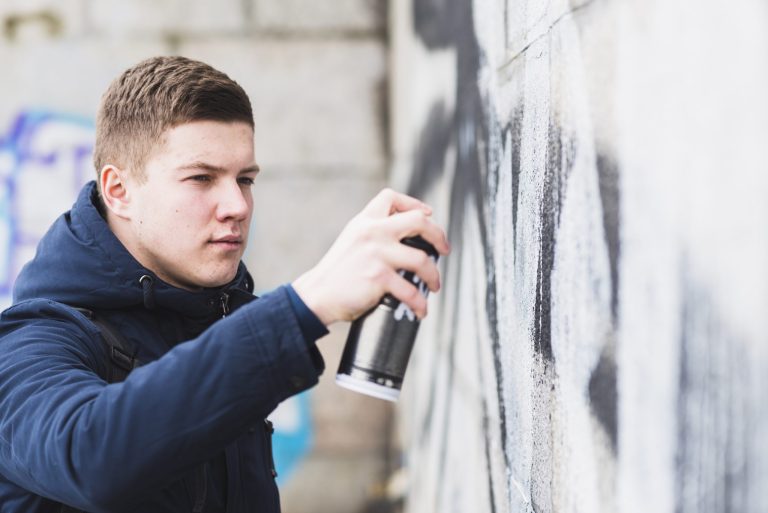
Graffiti damage extends beyond aesthetics. For commercial buildings, transit infrastructure, educational facilities, and public structures, repeated vandalism leads to rising maintenance budgets, operational disruption, and long-term substrate deterioration. Property owners often apply protective systems with the expectation that removal will be quick and surfaces will remain intact after cleaning.
However, many conventional solutions degrade after only a few cleaning cycles. Staining, ghosting, surface etching, and coating breakdown frequently follow aggressive solvent removal. When improperly specified or applied, an anti-graffiti coating becomes a temporary fix rather than a durable protection strategy.
People Also Ask
1. How long does anti-graffiti coating last on commercial buildings?
Performance depends on surface preparation and coating type. High-performance powder systems typically last significantly longer than many liquid alternatives.
2. Can powder coatings resist repeated graffiti removal?
Yes. Dense, cross-linked architectural powder coatings offer improved chemical resistance and maintain integrity after multiple cleaning cycles.
Why Standard Anti Graffiti Treatment Systems Fail in Commercial Environments
Traditional anti-graffiti systems often rely on sacrificial or semi-permanent liquid coatings. While these may allow initial graffiti removal, they tend to deteriorate under repeated chemical exposure and environmental stress.
Common failure factors include:
- Thin film application that lacks mechanical durability
- Inconsistent adhesion to metal substrates
- Surface porosity that absorbs pigments and dyes
- UV degradation and chalking over time
- Loss of gloss and color consistency after multiple cleanings
In high-traffic commercial areas, surfaces may be cleaned frequently using aggressive solvents or pressure washing. Many liquid systems are not engineered to withstand repeated chemical attack. Over time, the protective layer weakens, allowing staining to penetrate deeper into the substrate.
Without proper surface preparation and engineered coating systems, commercial facilities face recurring cycles of repainting and repair.
The Role of Proper Surface Preparation and SSPC Standards
Coating performance begins with substrate preparation. Abrasive blasting performed to SSPC standards removes contaminants, oxidation, and mill scale while creating an anchor profile for mechanical adhesion.
Failure to prepare metal surfaces correctly results in premature delamination and compromised protective films. Even advanced architectural coatings cannot compensate for poor adhesion.
Controlled surface preparation ensures:
- Uniform cleanliness
- Measurable surface profile depth
- Removal of embedded contaminants
- Long-term bonding integrity
For architectural aluminum and steel systems, this preparation stage establishes the foundation necessary for durable protective performance.
How High-Performance Architectural Powder Coatings Prevent Repeat Damage
Architectural powder coatings differ significantly from many liquid anti-graffiti products. Electrostatic application and oven curing create a dense, cross-linked film with minimal porosity. This structure resists the absorption of pigments and the penetration of chemicals.
High-performance powder systems offer:
- Greater film thickness consistency
- Enhanced abrasion resistance
- Improved chemical resistance to cleaning agents
- Reduced pigment staining
- Superior adhesion when paired with SSPC-compliant blasting
Anti-graffiti resistant powder coatings maintain surface integrity even after repeated cleaning cycles. Instead of acting as a sacrificial layer, the coating remains structurally intact, reducing long-term degradation.
For commercial buildings, transit stations, and infrastructure projects, this durability prevents recurring surface damage while maintaining a consistent visual appearance.
Architectural Compliance and Industry Standards
Architectural projects require coatings that meet defined performance benchmarks. Powder coatings used in commercial construction can align with AAMA standards for aluminum substrates while adhering to ASTM requirements for testing and durability.
Additional compliance may include UL certifications, CSA standards, and NEMA classifications where applicable. These standards ensure coatings perform under environmental stress, UV exposure, and chemical contact.
Engineered powder systems designed for architectural applications provide predictable performance across façade panels, railings, structural aluminum, and exterior metal components.
Lifecycle Cost Impact: Preventing Recurring Maintenance Cycles
Repeated graffiti removal using inadequate coatings increases long-term operating costs. Each repainting cycle requires surface preparation, material expense, labor allocation, and downtime.
High-performance powder coatings reduce these recurring costs by maintaining structural film integrity over extended periods. Fewer recoating cycles translate to measurable lifecycle savings.
Facilities benefit from:
- Reduced maintenance frequency
- Lower long-term labor expenses
- Improved corrosion resistance beneath the coating
- Sustained aesthetic quality
By investing in engineered coating systems from the outset, commercial operators mitigate the financial impact of repeated vandalism.
Engineered Coating Systems Deliver True Anti Graffiti Protection
Effective graffiti protection requires more than a surface-level solution. Long-term performance depends on SSPC-compliant surface preparation, dense coating structure, and compliance with architectural performance standards.
Professional Powder Coating provides high-performance architectural powder systems engineered to deliver durable, anti-graffiti-resistant protection for commercial and infrastructure applications. Each project follows strict quality measures to ensure consistent film build and long-term adhesion.
For commercial facilities seeking reliable anti-graffiti treatment solutions that reduce recurring maintenance cycles, contact Professional Powder Coating to implement engineered protective systems designed for lasting performance.