
Key takeaways
- Map the real site exposure, including salt, UV, condensation and standing-water points, before choosing a system.
- Design edges, crevices and drainage for coating, and show bonding pads and gasket seats on a masking drawing.
- Inspect vulnerable edges and seams on a first article and agree on field touch-up before units ship.
Ontario's electricity planning points to major long-term demand growth. That raises the stakes for equipment durability, but a forecast is not a coating specification. The cabinet's location, geometry and electrical interfaces determine the finishing questions.
Map the actual exposure
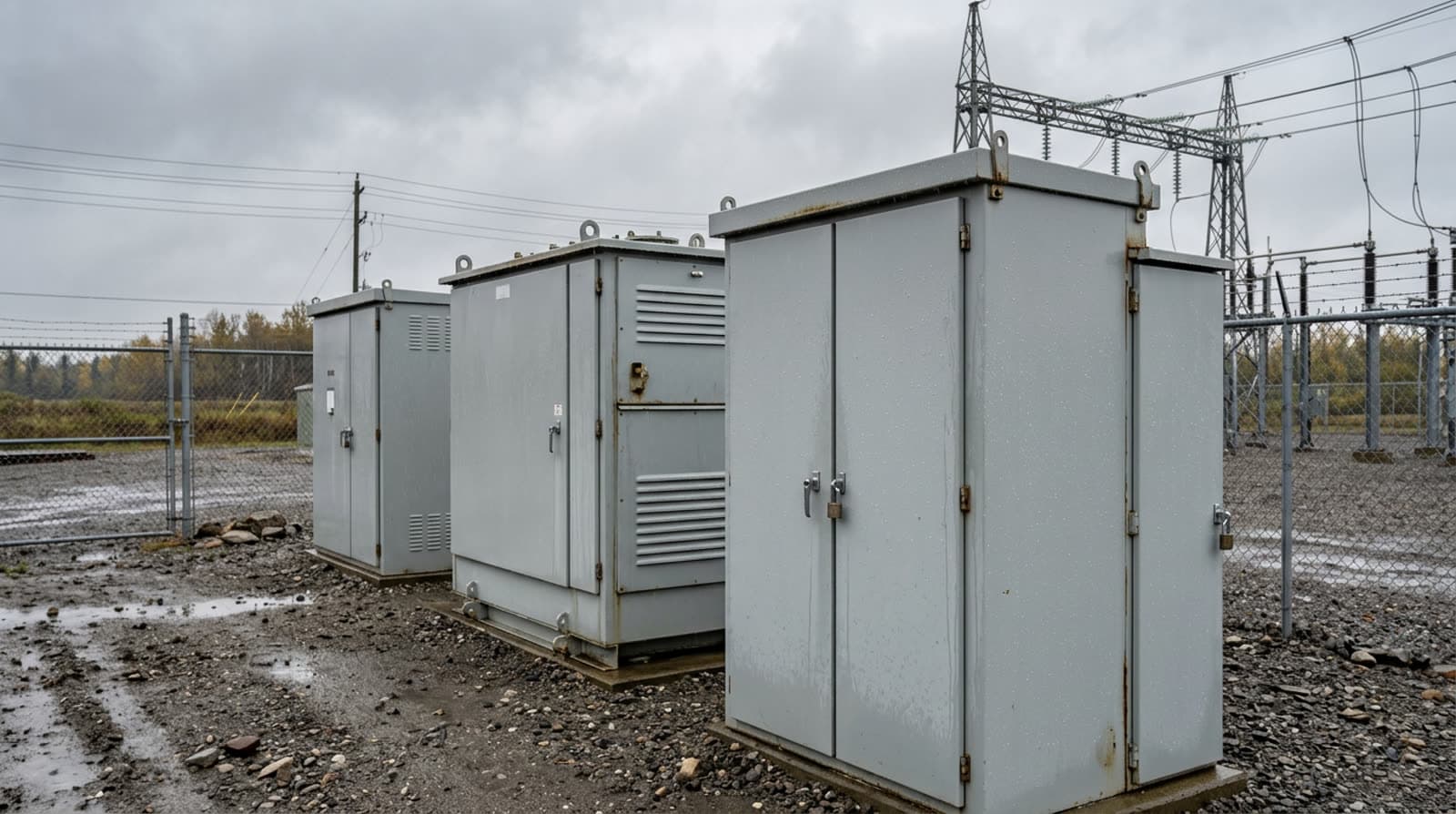
Outdoor cabinets may face precipitation, road salt, sunlight, condensation and cleaning. Identify the site and orientation, likely standing-water points and whether a unit is indoors, sheltered or fully exposed. Specify the metal and fabrication state, including welds and cut edges.
The IESO's 2026 outlook forecasts substantial demand growth in Ontario. It supports planning for grid equipment, not a claim that any one cabinet design or finish has been selected.
- Substrate and fabrication
- Salt, UV, moisture and temperature exposure
- Drainage and maintenance access
Design coating into the enclosure
Ask the fabricator to smooth sharp edges where the design permits, manage crevices and avoid water traps. Show all bonding pads, hinge interfaces, threads, gasket seats and identification locations on a masking drawing. The electrical designer must approve the treatment of contact surfaces.
Choose a coating system and pretreatment for the stated environment, then validate it on representative parts. Salt spray exposure by itself does not guarantee outdoor service life.
Inspect vulnerable edges and seams on a first article, not only a flat witness panel.
Document acceptance and repair
Specify appearance criteria, thickness measurement locations, adhesion method where appropriate, and handling damage limits. Agree on field touch-up compatibility and maintenance instructions before units ship. A repeatable record is more useful than an unqualified promise of “weatherproof” coating.
Frequently asked questions
What coating details matter most for outdoor switchgear enclosures?
Site exposure, substrate and fabrication, edge condition, water traps, masking of electrical contact surfaces, and a system and pretreatment validated on representative parts.
Does passing salt spray make an enclosure weatherproof?
No. Salt spray exposure alone does not guarantee outdoor service life. Validate the system on representative parts and document acceptance and repair criteria.
Who approves coating on electrical contact surfaces?
The electrical designer must approve how bonding pads, hinge interfaces, threads and other contact surfaces are masked or treated.
Next step
Specifying enclosures for outdoor power distribution?
Send the cabinet drawing, site conditions and masking requirements. We will review edges, drainage and inspection points with your team.
- ISO 9001:2015 registered
- Technical review before pricing
- Toronto facility, North American service