
Technical Insight
Corrosion: What It Is, How It Works and How to Stop It
Corrosion explained for engineers: what it is, how the anode and cathode drive it, the main types, what it costs and how coatings and design control it.
Read article →

















































Technical Insights
Guidance for engineers, procurement teams, OEMs and fabricators planning coating and surface-preparation work.
Technical Insight
Corrosion explained for engineers: what it is, how the anode and cathode drive it, the main types, what it costs and how coatings and design control it.
Read article →
Technical Insight
How chemical stripping removes paint and powder coating from industrial parts: stripper types, how to protect the substrate, US rules, and recoating prep.
Read article →
Technical Insight
ISO 9001 vs ISO 13485 explained for engineers and quality managers: scope, documentation, risk, suppliers, and what each certificate proves in a supply chain.
Read article →
Technical Insight
ISO 9001 vs AS9100 explained: what AS9100 adds, which one your customers require, and how it affects coating and finishing suppliers on aerospace parts.
Read article →
Technical Insight
Sandblasting and shot blasting differ in how media is thrown, what it does to metal and where it fits. See how to pick one before coating, plating or peening.
Read article →
Technical Insight
How to specify powder coating for cable trays: when it beats or complements galvanizing, surface prep, film build, grounding continuity and QA documents to request.
Read article →
Technical Insight
FEVE vs PVDF compared for engineers: chemistry, AAMA 2605 performance, gloss range, cure, VOCs and field repair, plus how to write a spec that works.
Read article →
Technical Insight
Galvanizing or powder coating? Compare corrosion life, scratch behavior, color, cost drivers and duplex systems, so you can specify the right finish for steel.
Read article →
Technical Insight
Powder coating vs paint for industrial metal parts: durability, cost, VOCs, surface prep and geometry limits, with a clear way to choose for your spec.
Read article →
Technical Insight
ANSI 61 and RAL 7035 are both light grays, but neither is a coating spec. See how to write a powder coating callout that gets the part you expect.
Read article →
Technical Insight
RAL vs Pantone for coated metal parts: what each system defines, why no official conversion exists, and how to specify color so parts arrive right.
Read article →
Technical Insight
Why pinholes and bubbles appear in powder coating on castings and galvanized parts, and the preheat, cure and prep steps engineers use to stop them.
Read article →
Technical Insight
Trace pinholes in powder coating with a control panel, one variable per test, film thickness checks, and a clear path to lab testing when defects persist.
Read article →
Technical Insight
Compare wet and dry blasting for powder coating prep, from adhesion and finish repeatability to dust, waste, throughput, and the test panel to run first.
Read article →
Technical Insight
Match high temperature powder coating chemistry to service heat, verify cure at the metal, and control pretreatment to prevent failures in production.
Read article →
Technical Insight
Diagnose orange peel in powder coating with part metal temperature and film thickness checks, then correct cure settings and use hot coating on heavy parts.
Read article →
Technical Insight
Compare powder coating prices per square foot, then use coverage and transfer efficiency to estimate material costs and build a complete shop quote.
Read article →
Technical Insight
See how ESD powder coating works, what engineers should specify in an RFQ, and how ASTM D7378 and ISO aligned quality checks protect critical parts.
Read article →
Technical Insight
Learn how cleaning, abrasive blasting, powder choice, and oven controls help prevent outgassing, pinholes, and blisters when powder coating cast iron.
Read article →
Technical Insight
See how engineers choose among three insulation resistance tests, apply IEC, IEEE, and ASTM guidance, and know when coating results need lab validation.
Read article →
Technical Insight
Rules for engineers and packagers to choose shrink or stretch film for coated metal parts. Protect finishes, avoid heat or excess tension damage, and pick...
Read article →
Technical Insight
Practical shop floor masking for powder coating. Choose tapes and plugs by bake rating, size plugs precisely, and remove masks at 180–200°F for the...
Read article →
Technical Insight
Duplex checklist for engineers specifying powder over hot dip galvanized steel. Cite ASTM D7803, require pre bake controls, and run a sample trial before...
Read article →
Technical Insight
Troubleshoot powder coating blistering on production runs. Get the <30 µS/cm final rinse target, 45 to 60 minute prebake, film thickness limits, and...
Read article →
Technical Insight
Adhesion first guide for engineers. When to powder coat stainless steel, what passivation and timing to demand, ASTM test benchmarks, and what to request...
Read article →
Technical Insight
Actionable dielectric powder coating specs for engineers. Learn to tie test voltage to film thickness, call out ASTM D5162 and hipot testing, and write...
Read article →
Technical Insight
For engineers and specifiers: match corrosion resistant powder coatings to ISO 12944, set pretreatment and test targets, and set realistic service life...
Read article →
Technical Insight
Standards-first guide for engineers: the six report fields to accept dielectric strength tests, how IEC/ASTM methods differ, and why coatings and...
Read article →
Technical Insight
Engineer-focused guidance to pick anodize or powder coating using short (2 hour) and long (200 hour) corrosion tests, tolerance rules, repairability, and...
Read article →Coating Specification · 6 min read
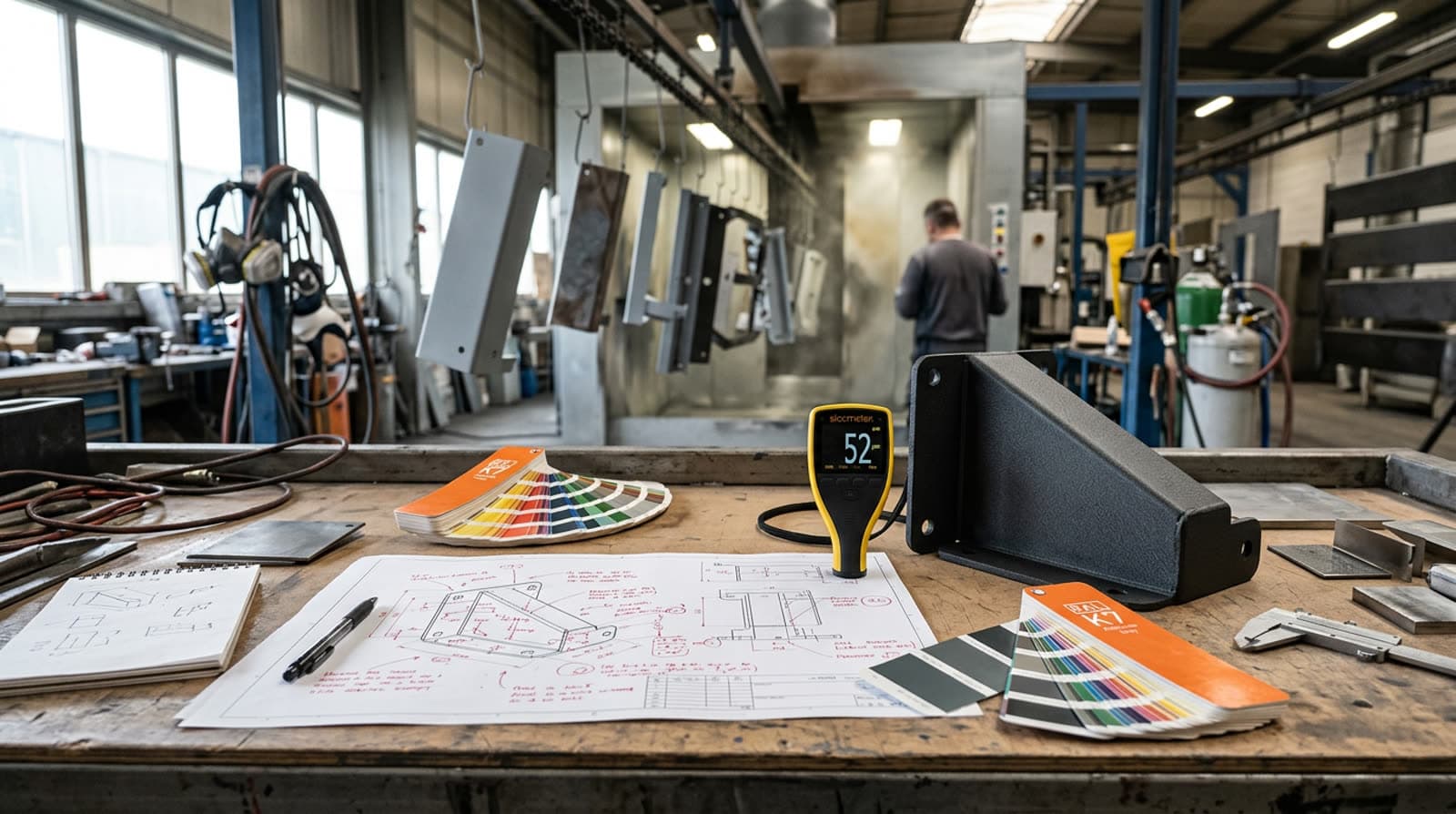
What to include in an industrial powder coating RFQ: substrate, exposure, pretreatment, masking, film thickness, cure, inspection and records.
Read article: Industrial Powder Coating Specification: A Buyer’s Checklist →Quality & Testing · 5 min read
A practical guide to dry film thickness, measurement locations, calibration and acceptance for coated steel and aluminum parts.
Read article: Powder Coating Thickness: How to Specify and Measure It →Quality & Testing · 6 min read
Understand ASTM B117 test hours, scribe creep, panels and why salt spray exposure does not predict years of outdoor service.
Read article: Salt Spray Testing for Powder Coating: What Results Actually Mean →Industrial Applications · 6 min read
Coating considerations for data center cabinets, power enclosures and support frames: heat, grounding, masking, airflow and service exposure.
Read article: Powder Coating Data Center Enclosures: A Specification Guide →Industrial Applications · 6 min read
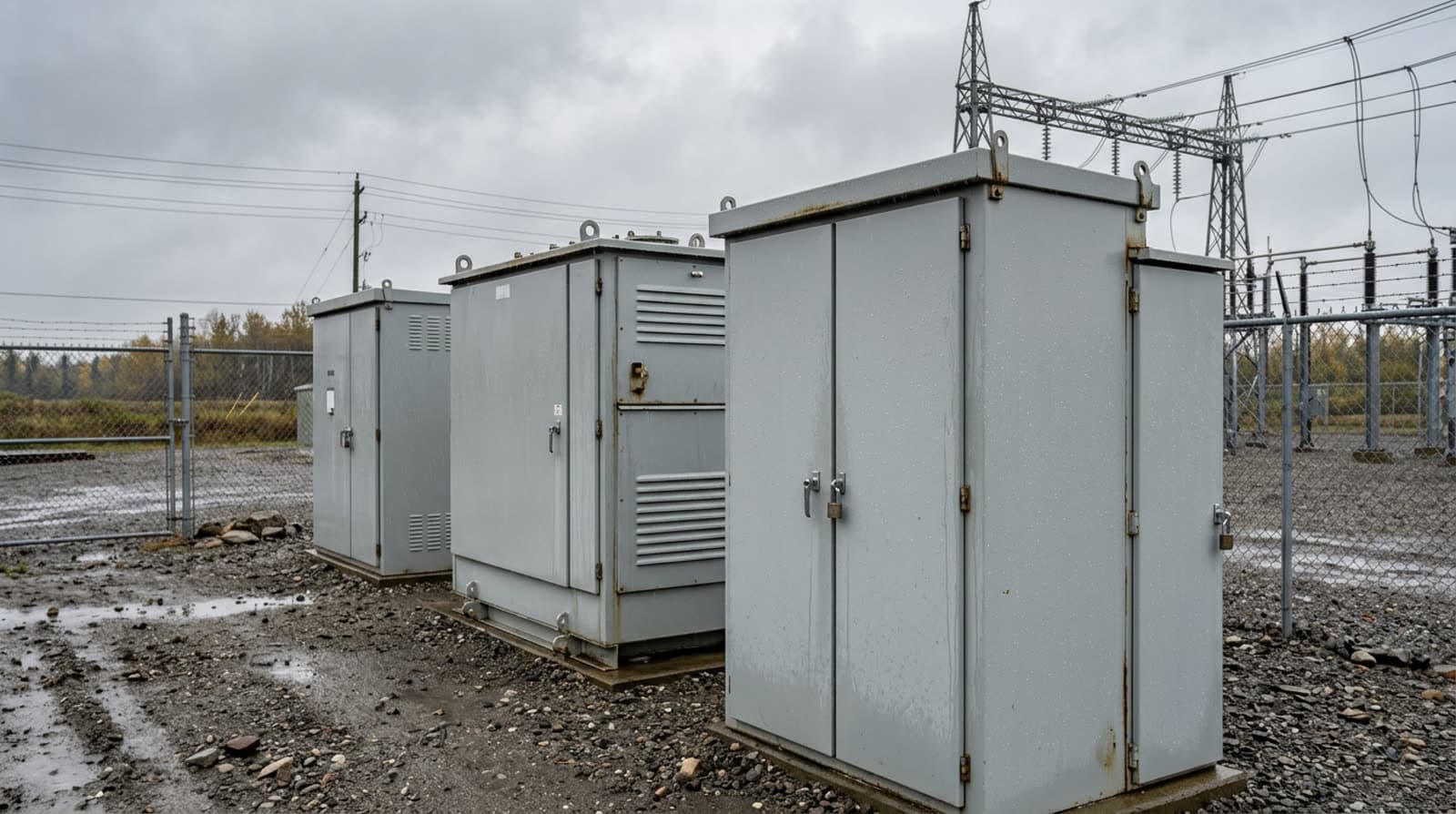
A practical coating brief for power-distribution cabinets and frames, including edges, water traps, grounding and inspection.
Read article: Coating Transformer and Switchgear Enclosures for Outdoor Service →Coating Specification · 5 min read
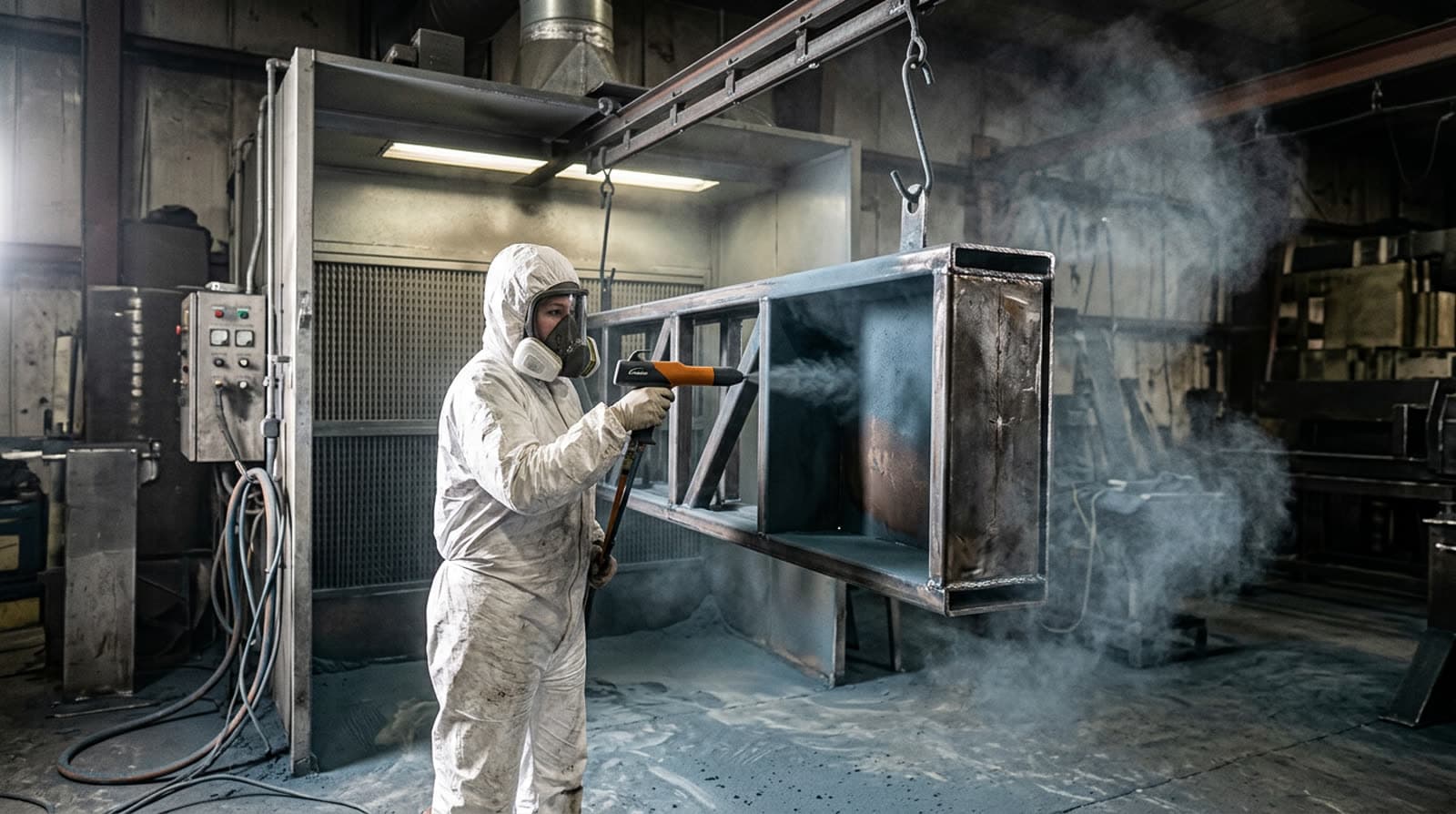
Why powder coating can miss deep corners, channels and boxed geometry, and how to plan coverage before production.
Read article: Faraday Cage Effect in Powder Coating: Recesses and Corners →Coating Specification · 5 min read
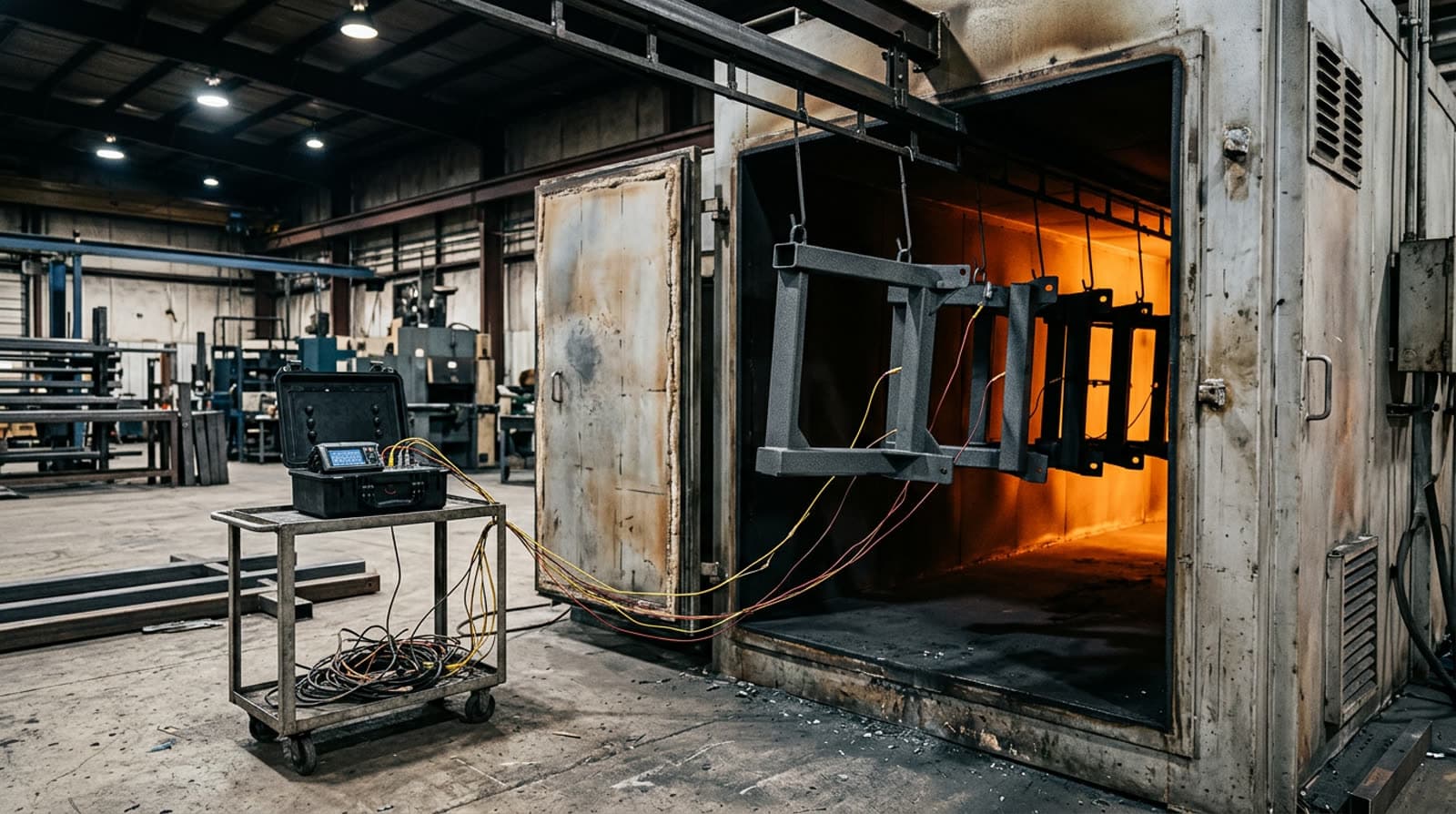
Why powder coating cure depends on the component's temperature and dwell time, especially for heavy fabrications and mixed loads.
Read article: Powder Coating Cure: Oven Temperature vs. Part Metal Temperature →Surface Preparation · 6 min read
How to specify steel surface condition, abrasive blasting and profile without treating one blast standard as a complete coating system.
Read article: Blasting Steel Before Powder Coating: Cleanliness and Profile →Industrial Applications · 6 min read
A guide to pretreatment, edges, drainage, weathering and inspection for powder coated aluminum near salt exposure.
Read article: Coastal Aluminum Powder Coating: What to Specify →Coating Specification · 5 min read
The drawings, quantities, masking, exposure and acceptance details a manufacturer should send for a useful coating quotation.
Read article: How to Get an Accurate Industrial Powder Coating Quote →Coating Specification · 4 min read
Specify fusion-bond epoxy for pipe and fittings: exposure, surface preparation, cure, end masking and continuity inspection.
Read article: FBE Pipe Coating: Specification and Inspection →Industrial Applications · 4 min read
Compare marine coating requirements for coastal steel, enclosures and immersed components before selecting powder chemistry.
Read article: Marine Metal Coatings: Exposure Comes First →Quality & Testing · 4 min read
Choose architectural aluminum coating requirements using the applicable AAMA edition, exposure and product-specific evidence.
Read article: AAMA 2604 vs 2605: Selecting an Aluminum Finish →Surface Preparation · 4 min read
Choose coating removal around substrate, geometry, existing finish and the condition needed for recoating.
Read article: Chemical vs Mechanical Metal Stripping →Surface Preparation · 4 min read
Review iron and zinc phosphate pretreatment by substrate, corrosion duty and process control rather than colour alone.
Read article: Iron vs Zinc Phosphate Before Powder Coating →Industrial Applications · 4 min read
Specify coating for defense support components using drawing revisions, approved materials, masking and inspection records.
Read article: Defense Component Coatings: Define the Requirement →Coating Specification · 4 min read
Assess powder coating using pretreatment, cure energy, material use, rework and service life instead of blanket green claims.
Read article: Powder Coating: Environmental Tradeoffs for Buyers →Browse by subject
Powder chemistry, substrates, film build, cure and performance requirements.
Blasting, stripping, cleaning and pretreatment before coating.
Inspection, testing, documentation and specification compliance.
Practical finishing considerations for demanding sectors and components.
Start here
6 min read
Plan a U.S.–Canada industrial finishing shipment: part details, freight responsibilities, documentation, packaging and delivery milestones to confirm before dispatch.
5 min read
A procurement worksheet for comparing local and long-distance coating quotes using the same specification, shipment scope and delivery requirements.
5 min read
The drawings, specifications and production details a coating supplier needs to prepare a useful industrial quote.
Send the drawings, performance requirements and production details for a technical review.