Key takeaways
- A colour is not a specification: describe the substrate, service environment and how the work will be accepted.
- Define the full coating system, including pretreatment, film thickness range, masking and cure based on part metal temperature.
- Name the test method, sampling plan and pass criterion, and agree on a first article for repeat orders.
A request for a black powder coated part is a colour request, not a performance specification. Engineers and buyers get more comparable quotes when they describe the component, its environment and how acceptance will be measured.
Start with the part and its service environment
Identify the base metal and grade, fabrication state, dimensions, weight, quantity, drawing revision and any existing finish. State whether the part will live indoors, outdoors, near road salt or in a washdown area. Include expected contact with chemicals, UV, abrasion and heat. Those conditions guide system selection; colour alone cannot.
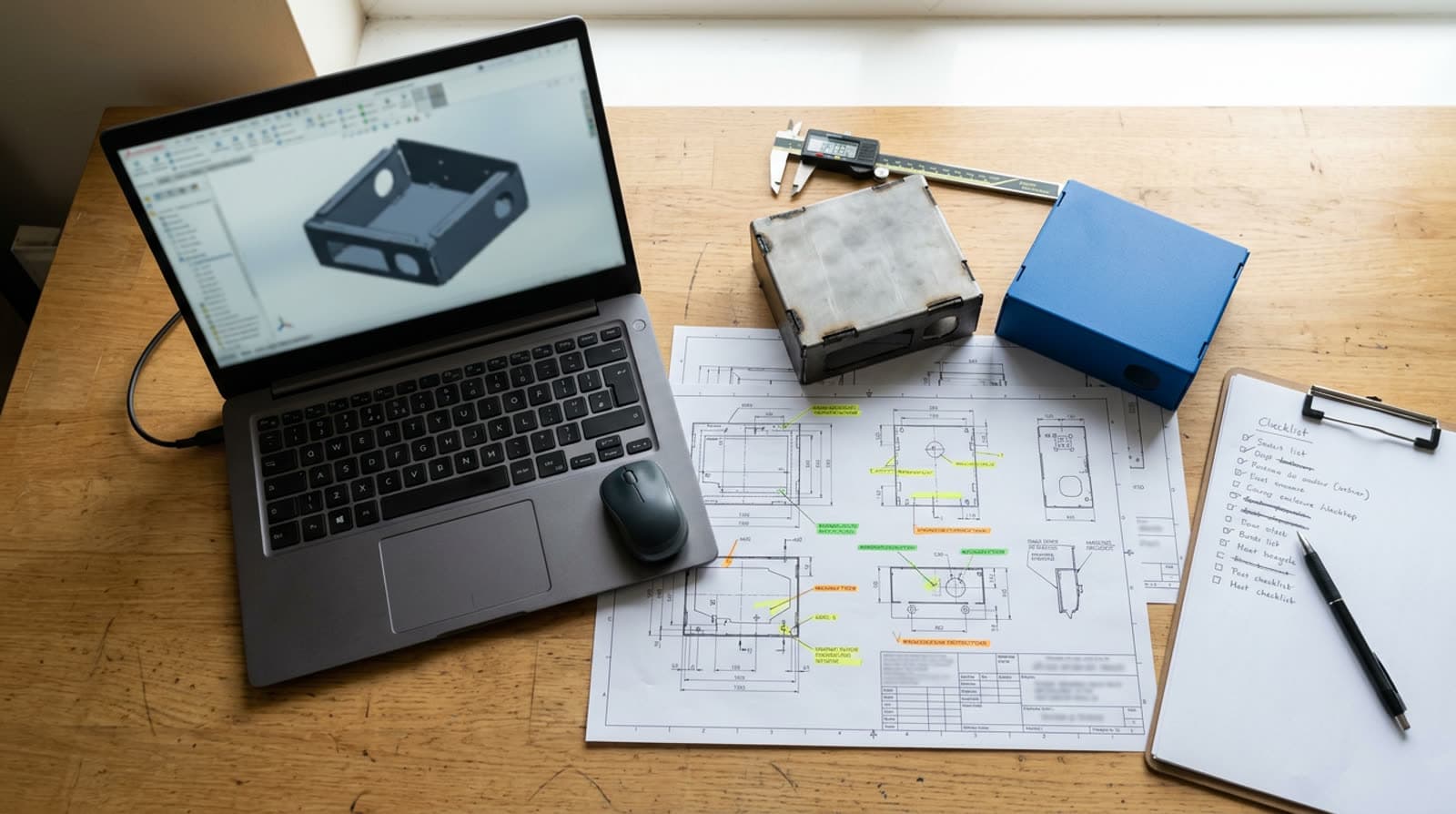
For assemblies, identify welds, cut edges, crevices, drainage points and surfaces that will be inaccessible after installation. Send photos and a drawing rather than asking the coater to infer critical faces.
- Substrate and fabrication method
- Service exposure and expected life
- Critical cosmetic and functional surfaces
Define the coating system, not just the finish
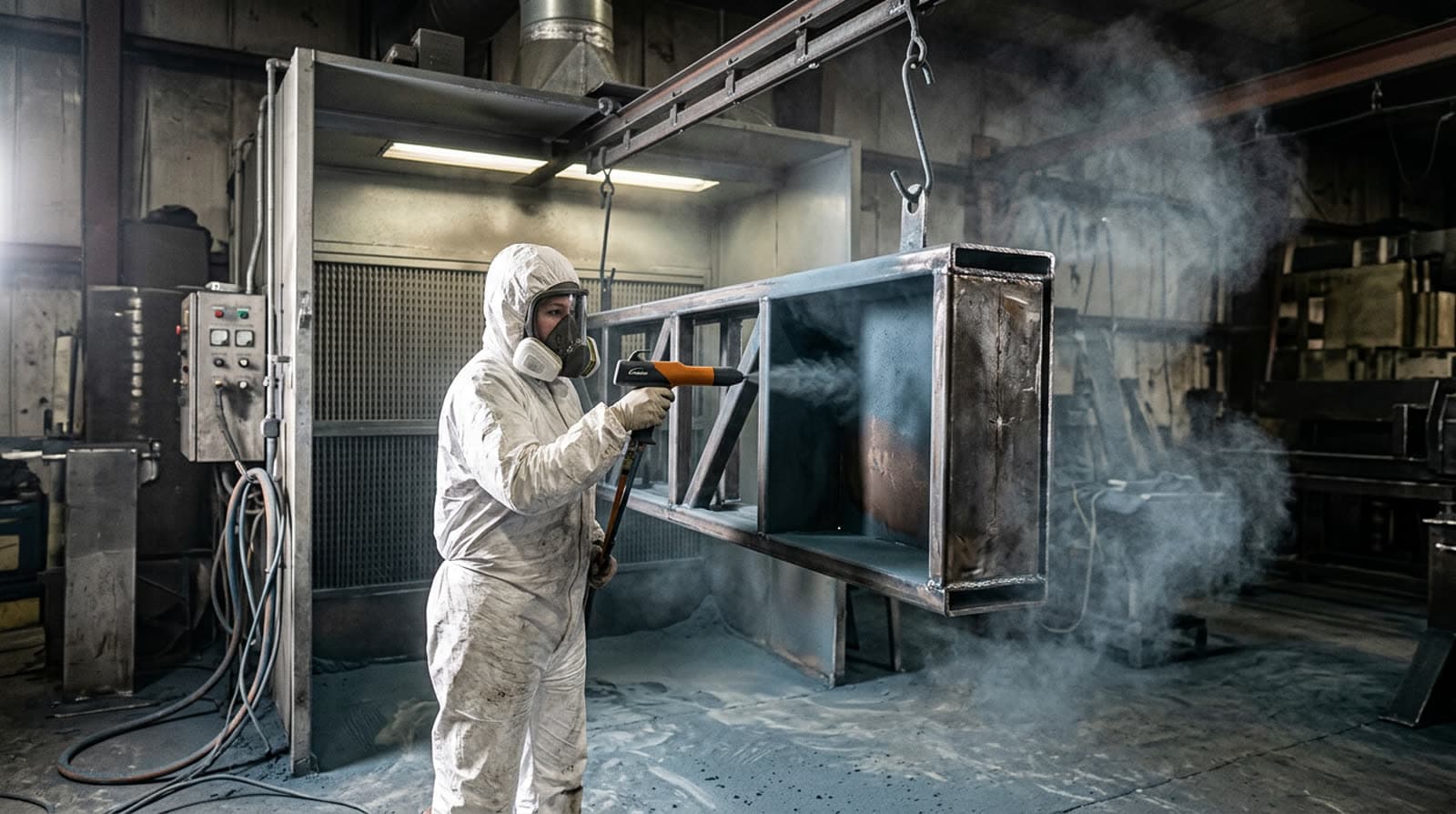
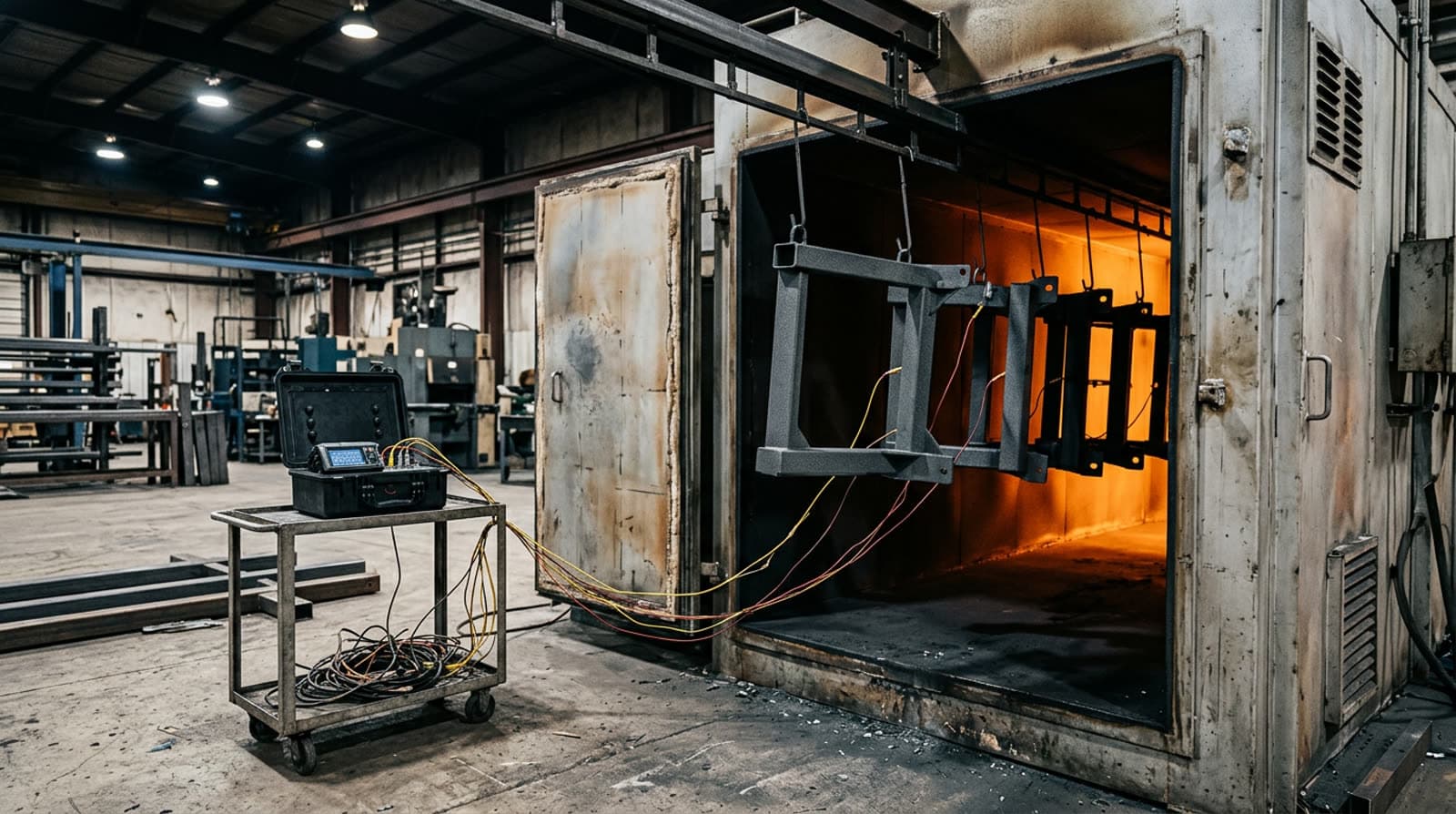
Specify the required preparation or performance outcome, approved primer and topcoat if applicable, colour and gloss tolerance, and a dry film thickness range at defined measurement locations. Confirm whether the powder manufacturer's cure schedule is based on part metal temperature rather than oven air temperature. A heavy part and a thin coupon can reach cure at different times.
Discuss sharp edges, hollow sections, threads, grounding points and mating surfaces early. Masking and racking decisions affect coverage, fit and cost. Do not assume that every cavity can be coated by electrostatic spray.
- Pretreatment and surface condition
- Coating chemistry and appearance
- Masking, racking, film build and cure
Make inspection and documentation explicit
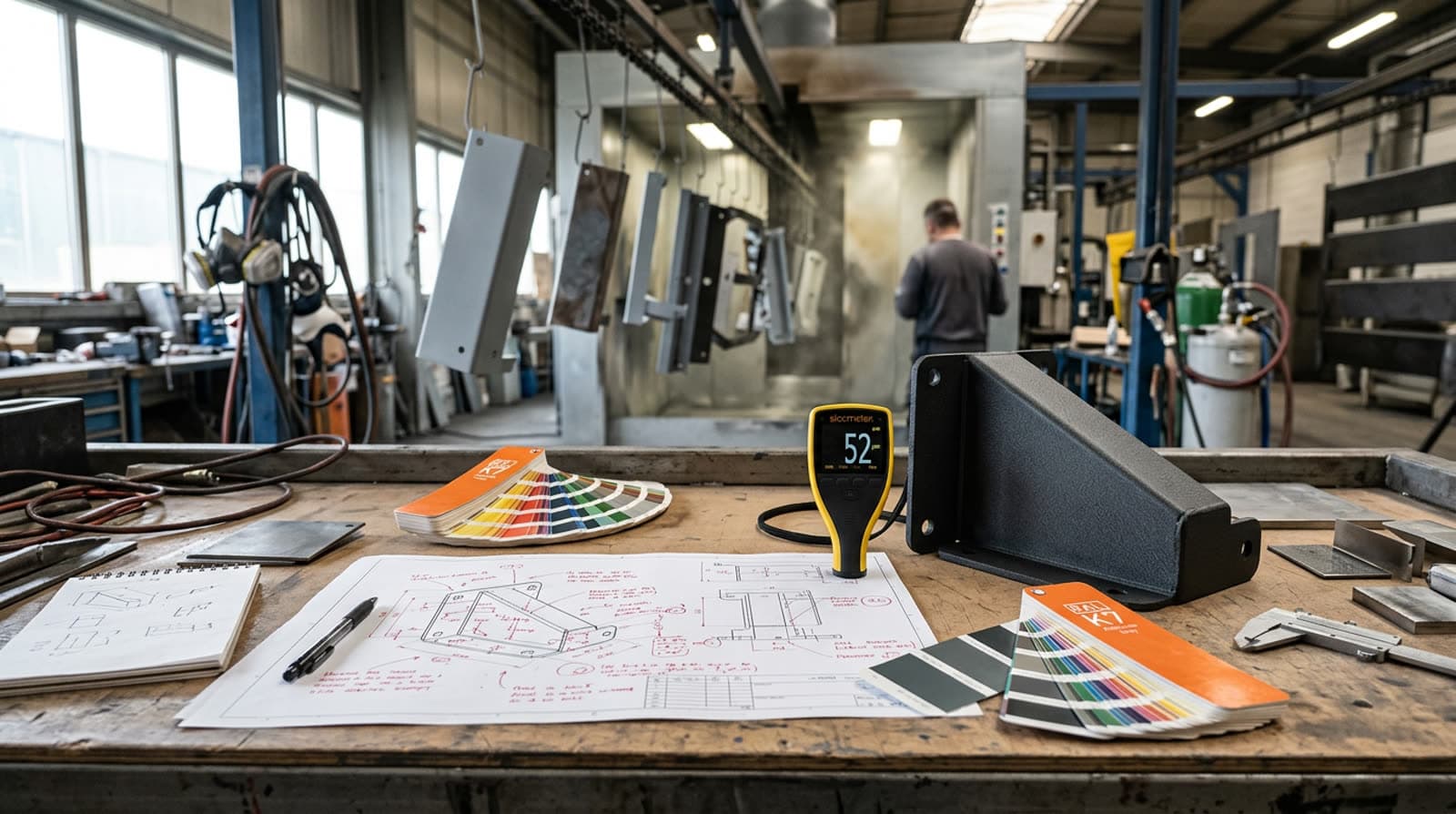
Name the test method, sampling plan, acceptance criterion and who receives the results. A standard number by itself does not establish a pass mark. Decide whether the job needs thickness readings, adhesion checks, visual criteria or qualification panels. Specify treatment of touch-ups and nonconforming parts before production starts.
For repeat orders, agree on a first article, retained reference sample and revision control. This is particularly valuable where the coating changes the fit of holes, tabs or electrical interfaces.
RFQ shortcut: attach the drawing, annual volume, exposure, coating target and the tests you will use to accept the work.
Technical references
The Powder Coating Institute defines pretreatment and film build in its glossary. ASTM D7091 addresses dry film thickness measurement; the test method and acceptance limits still need to be selected for the actual project.
Frequently asked questions
What should an industrial powder coating RFQ include?
Include the drawing and revision, base metal, dimensions, weight, quantity, service exposure, required preparation, coating and colour, film thickness range, masking areas, and the tests and acceptance criteria you will use to accept the work.
Is a standard number enough to specify coating acceptance?
No. A standard such as ASTM D7091 describes how to measure, not what result passes. The project specification must state the acceptance limits, sampling plan and who receives the results.
Why does the service environment matter more than colour?
Indoor, outdoor, road salt, washdown, UV, chemical and abrasion exposure each guide the coating system and preparation selection. Colour alone does not determine durability.
Next step
Have a specification that needs a second set of eyes?
Send the drawing and your draft requirements. Our team will flag missing details before they turn into quote revisions or rework.
- ISO 9001:2015 registered
- Technical review before pricing
- Toronto facility, North American service