Key takeaways
- Cure is defined by part metal temperature held for a stated time, not by the oven setpoint.
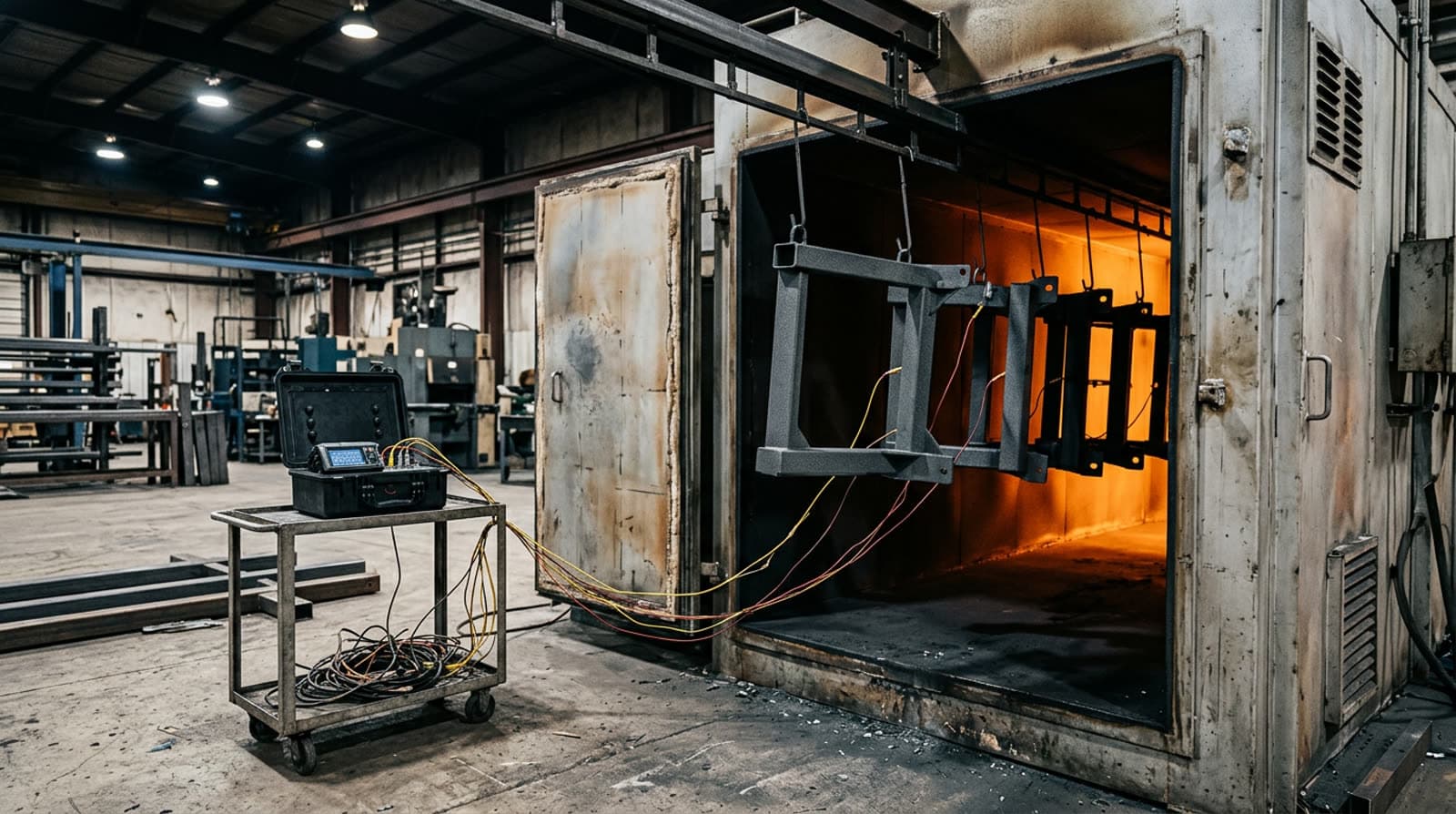
- Heavy sections and mixed loads heat differently; profile a representative load with sensors.
- Disclose heat-sensitive inserts, adhesives, seals and mixed metals in the RFQ.
An oven setpoint does not prove a powder coated component reached its required cure. Thick sections, mixed loads and complex geometry can heat differently, making the powder supplier's schedule and the part metal temperature central to the process plan.
The timer starts at the right temperature
A typical technical data sheet defines a cure window at a stated metal temperature for a stated time. Air temperature, oven dwell and actual part temperature are distinct measurements. A thick casting or heavy weldment may lag behind a thin test coupon. The coater should confirm the selected powder's instructions for the actual load.
Do not substitute a generic internet chart for the powder manufacturer's data. Some substrates, inserts, seals or assemblies may not tolerate the proposed heat cycle.
- Powder product and technical data sheet
- Part mass and thickest sections
- Temperature-sensitive inserts and tolerances
How to verify a representative load
For a new heavy component, discuss a temperature profile using sensors on relevant locations. Establish the time at which the metal reaches the required range and whether the whole part stays within the allowed window. Document the load configuration if it will recur.
Under-cure and over-bake can affect appearance or performance in different ways. If a first article fails a test, review pretreatment, film thickness and cure records together rather than guessing from oven settings alone.
Ask “What metal temperature and hold time does this powder require on this part?”
Add cure constraints to the RFQ
Disclose mixed-metal assemblies, adhesives, plugs, bearings and other heat-sensitive features. Define any required post-cure fit check. The coating and fabrication teams can then assess whether the part can be processed as supplied.
Frequently asked questions
Is powder coating cure based on oven temperature?
No. The powder manufacturer's technical data sheet defines cure at a stated metal temperature for a stated time. Oven air temperature and dwell are separate measurements.
Why do heavy parts cure differently?
Thick castings and heavy weldments take longer to reach the required metal temperature than thin coupons, so the cure timer should start only when the part reaches the required range.
How is cure verified on a new heavy component?
Run a temperature profile with sensors at relevant locations, confirm when the metal reaches the required range and whether the whole part stays within the allowed window, and document the load.
Next step
Coating heavy weldments or mixed-mass loads?
Share part weights and thickest sections. We will review the powder's cure window against your actual load before quoting.
- ISO 9001:2015 registered
- Technical review before pricing
- Toronto facility, North American service