Key takeaways
- Specify a thickness range, measurement locations and an acceptance rule, not a single copied number.
- Match the gauge and probe to steel or aluminum and verify it against suitable standards per ASTM D7091.
- Excessive film build can interfere with threads, fits and grounding without automatically improving durability.
Film thickness is measurable, but a single reading rarely describes an entire fabricated part. Geometry, substrate and the chosen coating system all affect where to measure and what range to accept.
State a range and a measurement plan
The coating supplier's technical data and the project specification should establish the target range. Avoid copying a universal thickness number from another job: the acceptable build depends on powder, corrosion design, appearance, electrical function and assembly tolerance. Define whether the range applies to individual readings, an average, or both.
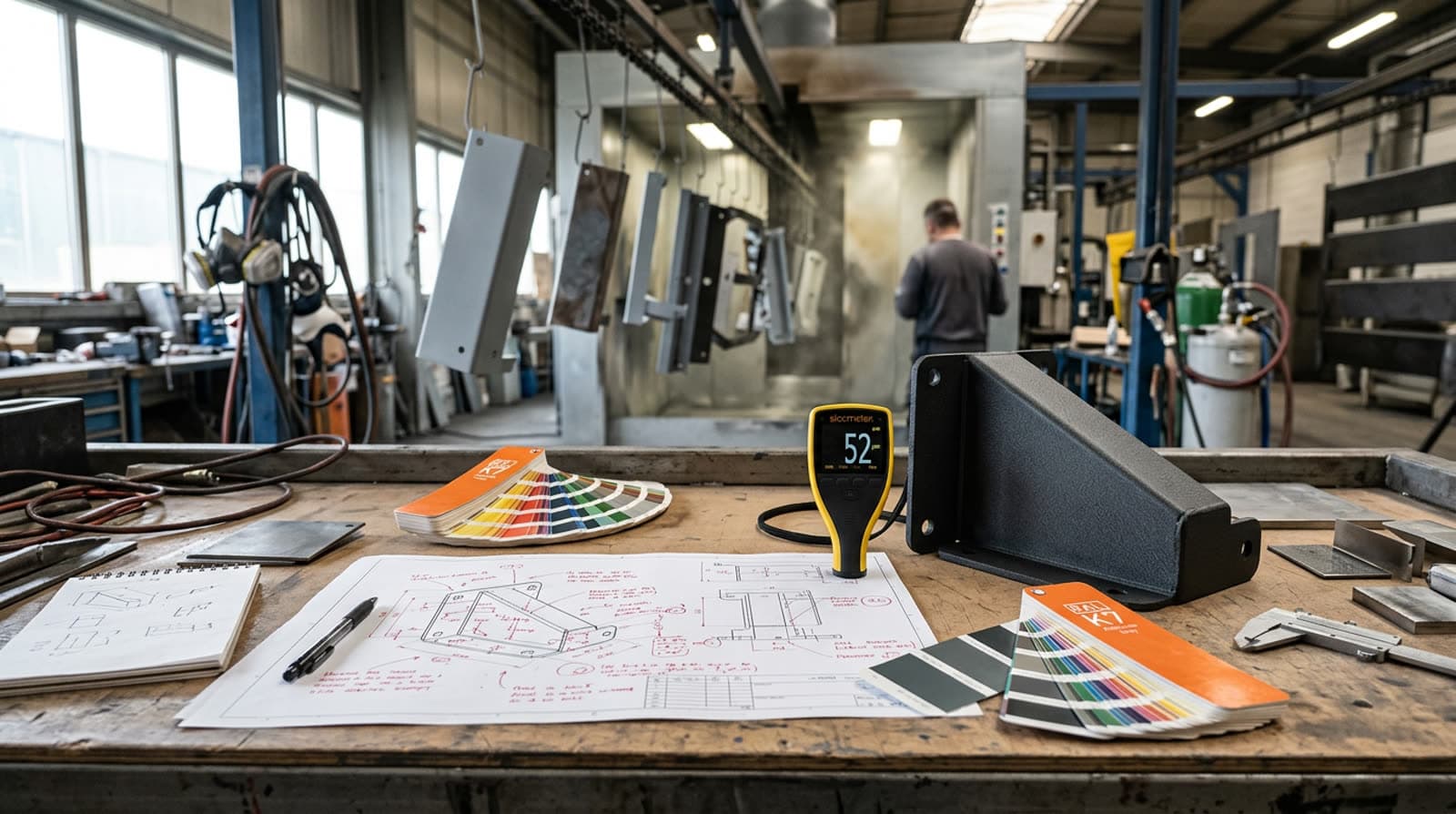
Mark measurement points on the drawing. Include exposed faces and difficult areas, while recognizing that small edges, welds, recesses and curved sections may need different treatment from broad flat panels. Establish sampling frequency and records for a production run.
- Target range and units
- Measurement locations and number of readings
- Instrument method and acceptance rule
Match the gauge to the substrate
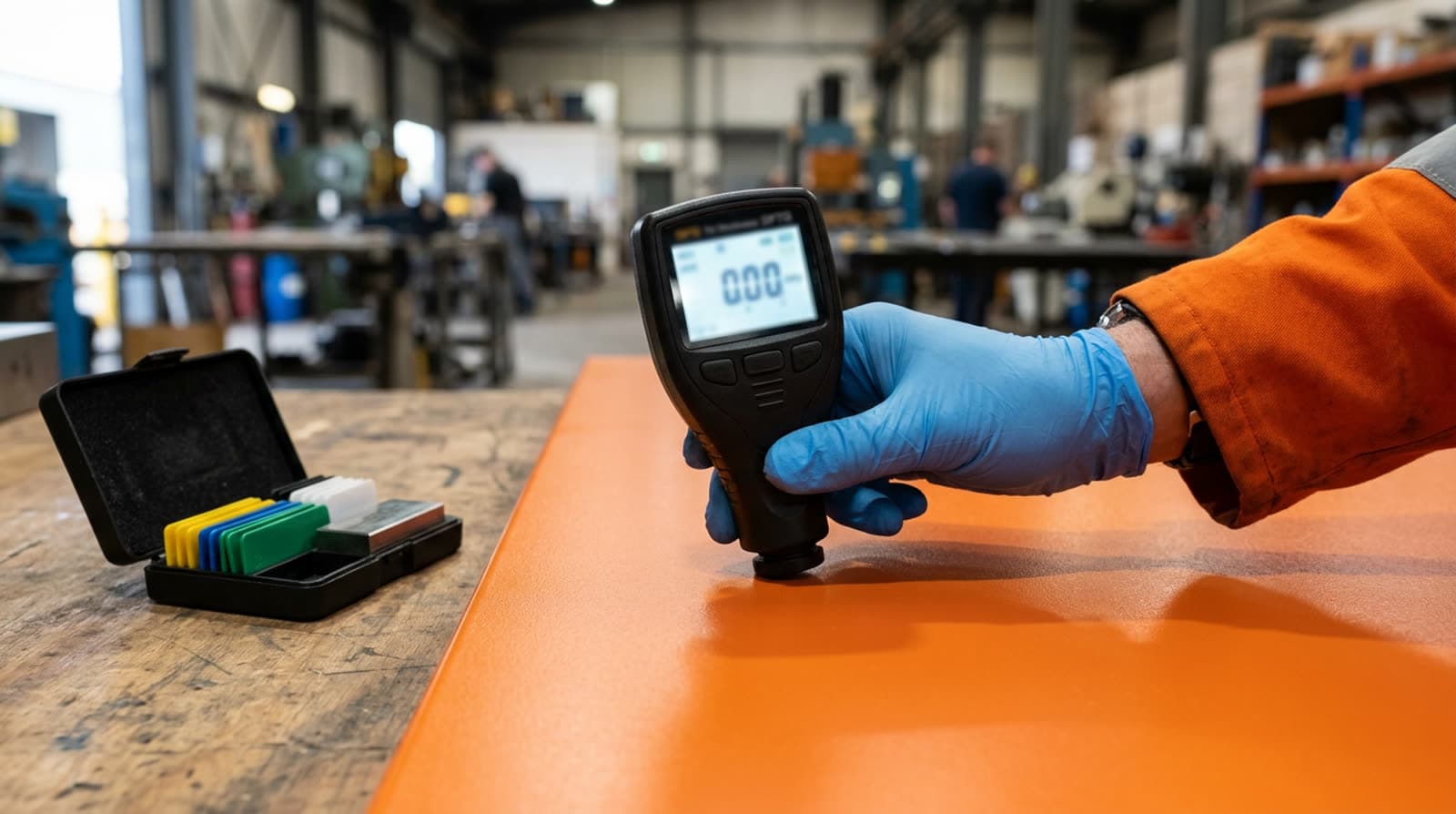
ASTM D7091 covers nondestructive thickness measurement of nonmagnetic coatings on ferrous metals and nonmagnetic, nonconductive coatings on nonferrous metals. Select the appropriate probe for steel or aluminum, verify it against suitable standards, and account for surface profile and curvature. The standard describes measurement practice; it does not supply a project-specific coating target.
A blasted surface is not a perfectly flat datum. Record the substrate condition and follow the gauge and method instructions so readings from different operators can be compared.
Ask for readings from named part locations, rather than a certificate with one unexplained number.
Too little and too much can both be problems
Insufficient coverage can leave vulnerable areas. Excessive build can interfere with threads, closures, grounding, snap fits and appearance; it does not automatically improve durability. On assemblies, test fit coated first articles before approving a production lot.
When a specification calls for a primer and topcoat, define whether thickness is measured for each layer or the complete system. Document rework limits if a part falls outside the agreed range.
Frequently asked questions
How should powder coating thickness be specified?
State the target range and units, whether it applies to individual readings or averages, the measurement locations marked on the drawing, the number of readings and the instrument method.
Which standard covers dry film thickness measurement?
ASTM D7091 covers nondestructive thickness measurement of nonmagnetic coatings on ferrous metals and nonmagnetic, nonconductive coatings on nonferrous metals. It does not set a project-specific target.
Is a thicker powder coating always better?
No. Too much build can affect threads, closures, snap fits, grounding and appearance. Test-fit coated first articles before approving production.
Next step
Need thickness readings you can trust at every critical face?
Tell us the part, the tolerance-sensitive features and your target range. We will propose measurement locations and documentation for the run.
- ISO 9001:2015 registered
- Technical review before pricing
- Toronto facility, North American service