
Industries
Refineries & Petrochemical
Chemical- and corrosion-resistant finishing for refinery and process-industry metalwork.
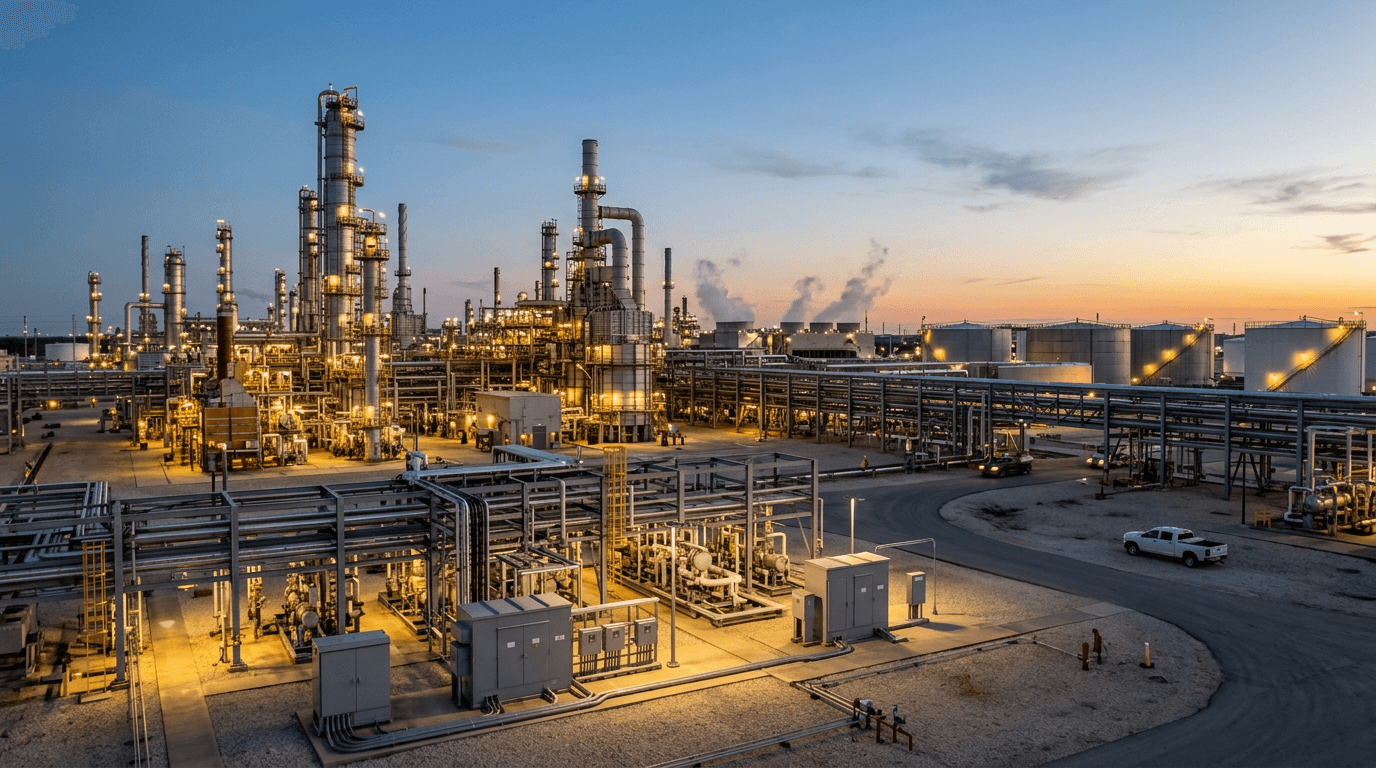
Refineries and petrochemical facilities expose metal components to corrosive atmospheres, acids, solvents, hydrocarbons, moisture, heat and aggressive maintenance conditions. PPC supports equipment manufacturers, fabricators and maintenance programs with abrasive blasting, pretreatment and specification-led protective coating systems for suitable refinery and process-industry components.
Quick answer
PPC supports suitable refinery and petrochemical metalwork with abrasive blasting, pretreatment and PPC patented and custom protective coating systems selected against the actual chemical, concentration, temperature and exposure condition. The coating system is evaluated against the project specification and product-specific resistance data before use.
Protection for chemically aggressive service
Chemical resistance must be matched to the actual service condition. PPC reviews the substrate, chemical or acid involved, concentration, operating temperature, exposure duration and whether the part is immersed, splashed, washed down or exposed to vapour before confirming a coating system.
PPC patented and custom protective coating systems are developed and selected for demanding corrosion and chemical-resistance requirements on suitable metal components. Product-specific chemical-resistance data and the governing project specification are used to determine whether a system is appropriate for the intended environment.
Where protective powder coating fits in a refinery
Typical candidates include equipment guards, electrical and control enclosures, non-process piping supports, skids, brackets, frames, access components and other fabricated metalwork that can tolerate the preparation and cure cycle.
Direct process-contact surfaces, continuously immersed equipment, extreme-temperature components and areas governed by specialized linings or process-vessel codes are reviewed separately rather than treated as standard powder-coating applications.
Preparation, testing and production control
Abrasive blasting, mechanical cleaning and phosphate pretreatment can be combined with controlled application and cure to build a complete protective system. PPC can also define inspection requirements such as film thickness, cure, adhesion, corrosion testing or chemical-resistance verification when they are part of the approved specification.
Common applications
- Equipment guards and housings
- Electrical and control enclosures
- Skids, frames and support structures
- Non-process brackets, access components and maintenance fabrications
Specification considerations
- Chemical or acid type and concentration
- Operating temperature and exposure duration
- Immersion, splash, wash-down or vapour exposure
- Substrate, preparation standard and required verification
Technical planning table
Final values are project-specific. These are the inputs PPC confirms before approving a production process.
| Technical input | What PPC confirms |
|---|---|
| Substrate & condition | Material, fabrication method, contamination, corrosion and existing finish. |
| Preparation | Cleaning, stripping, blasting or chemical pretreatment required by the specification. |
| Coating system | Powder chemistry, colour, gloss, texture, film build and cure window. |
| Critical surfaces | Masking, threads, grounding/contact areas, tolerances and no-coat zones. |
| Verification | Inspection, test method, acceptance limits, sampling and documentation. |
| Production & logistics | Quantity, line fit, racking, handling, packaging, freight and delivery cadence. |
From specification to shipment
How PPC plans the work
Review
Confirm the drawing, substrate, part condition, quantity, end use and governing performance requirements.
Prepare
Select cleaning, stripping, blasting or chemical pretreatment appropriate to the substrate and specification.
Apply & cure
Control coating application, film build, grounding and cure around the approved process window.
Inspect & protect
Verify agreed acceptance criteria, document results when required, then package the finish for shipment.
What to include in your RFQ
Complete project information helps PPC assess feasibility, select the correct process and return a useful quotation.
- Part drawings, dimensions, weight and substrate
- Quantity, annual volume and production schedule
- Current surface condition and existing finish
- Required coating, colour, gloss and texture
- Performance specification and test requirements
- Masking, critical surfaces and tolerance notes
- Packaging, labelling, freight and delivery needs
Frequently asked questions
Can powder coating be used in refinery environments?
Yes, on suitable non-process-contact metal components when the coating system is matched to the substrate, chemical exposure, temperature and service condition. Process-contact, continuously immersed or extreme-temperature equipment may require a different lining or coating technology.
Which coatings resist refinery chemicals and acids?
There is no single coating that is appropriate for every chemical. PPC patented and custom protective coating systems are selected around the specific chemical, concentration, temperature, exposure time and governing project requirements.
What refinery components can PPC coat?
Typical candidates include guards, electrical enclosures, frames, skids, supports, brackets, access components and other fabricated steel or aluminum parts that can tolerate the required preparation and cure cycle.
How does PPC prepare refinery components before coating?
Preparation may include cleaning, stripping, abrasive blasting, mechanical preparation and phosphate pretreatment. The route is selected from the substrate condition and governing coating specification.
Can PPC verify chemical or corrosion performance?
PPC can define in-house inspection and testing around the approved specification, including film-thickness, cure, adhesion and corrosion-related checks, and can coordinate additional or third-party testing when required.
Your source for all your industrial powder coating and blasting needs
Contact us today to transform your products with our expertise, facilities, and commitment to quality.