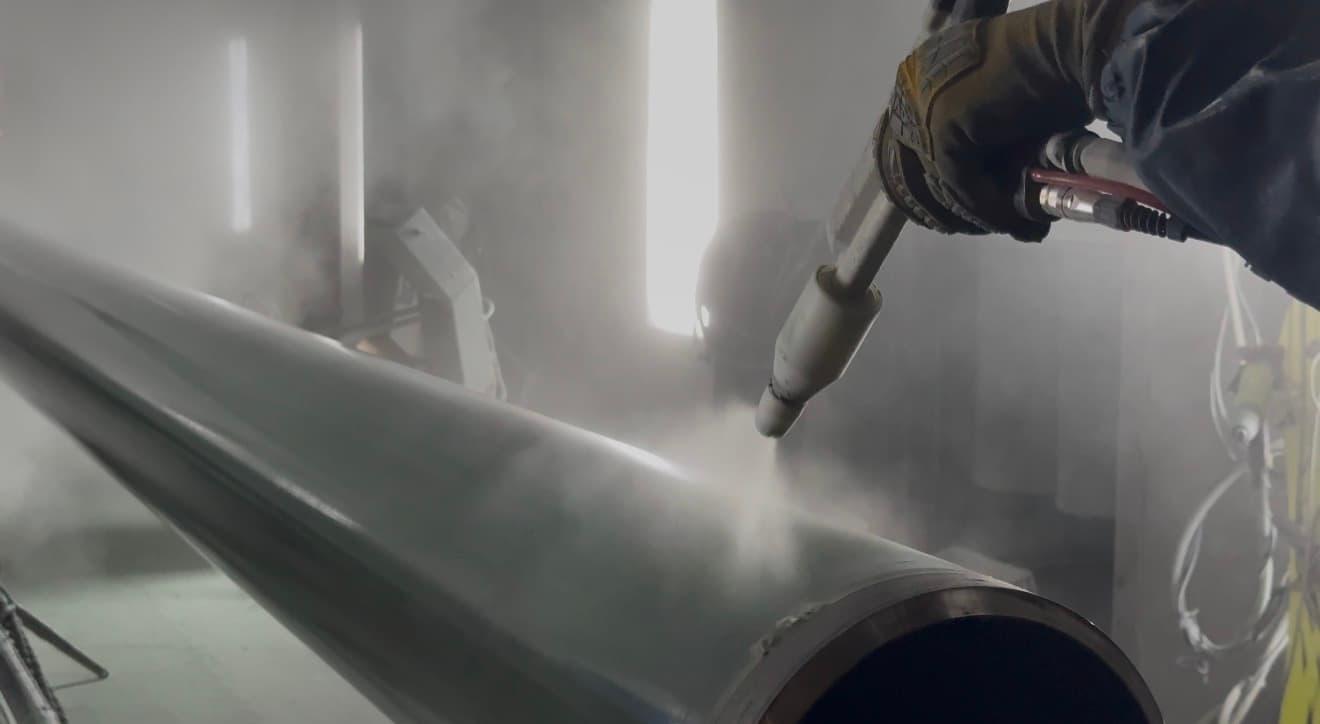
Water distribution equipment lives in damp pump stations, vaults and treatment buildings with constant condensation. PPC finishes pipe supports, valve and hydrant components, access hatches and process skids for water equipment manufacturers and utility contractors.
Is an epoxy-coated valve automatically approved for drinking water
Condensation and humidity vary between a ventilated plant room, an underground vault and outdoor waterworks equipment. State the actual exposure and the utility's identification requirements rather than assuming all pump stations operate under the same conditions.
Coating selection for water distribution components
Epoxy powders offer strong moisture and chemical resistance for interior pump-station equipment. Hydrant and exterior parts usually get a polyester topcoat for UV. Wetted surfaces that touch drinking water need a powder certified for potable-water contact.
Preparation and interfaces: Water Distribution
Castings and fabrications are blasted. Castings may be pre-baked to release trapped gas, and flange faces, gasket surfaces and threaded connections are masked.
Acceptance and release: Water Distribution
Define thickness, adhesion and any specified holiday inspection for the accepted duty. Where potable-water contact applies, verify the actual product listing, restrictions and application requirements before acceptance; certification is not assumed from an epoxy product name.
Utility orders often come as project lots for station rebuilds. Parts are tagged by station or line number to simplify installation.
Application limits for water distribution
Interior surfaces in contact with drinking water must use a certified product and process. PPC confirms these requirements before quoting any wetted component.
Application intelligence
What engineers and procurement teams need to know
01Industry & buying context
Water utilities operate outdoor assets and wet treatment spaces
Water distribution projects use pump-station enclosures, valve actuator covers, support brackets and dry-side equipment frames. These face condensation, weather and service chemicals, while wetted potable-water components require dedicated material approvals.
02Engineering & specification
Keep potable-water contact claims evidence-based
Classify potable-contact and noncontact surfaces separately. Contact with drinking water may require NSF/ANSI/CAN 61 or equivalent approvals for the entire specified system; routine powder coating is not automatically qualified. Review water chemistry, chlorine exposure, cleaning, ambient corrosion and gasket interfaces.
03PPC production fit
PPC for non-wetted utility assemblies
PPC can review control panels, fabricated pump supports and valve-associated noncontact covers, with in-house preparation and documented inspection. Ship components grouped by pump station and equipment tag to simplify contractor commissioning.
Relevant industry source: American Water Works Association: technical standards
These are project-planning considerations, not a representation that every coating chemistry, certification or third-party approval is available for every part. PPC confirms technical feasibility, required testing and the approved process against the project specification.
Check the actual drinking-water material listing
NSF/ANSI/CAN 61 addresses health effects of materials and products in contact with drinking water. A buyer should verify the proposed coating's listing and use conditions separately from the finish used on an external pipe support.
NSF: NSF/ANSI/CAN 61Common applications
- pipe supports and hangers
- valve and hydrant components
- access hatches and vault frames
- pump and process skids
What to include in your RFQ
For Water Distribution components, start with these project details. Our team can help identify what is still needed.
- External or drinking-water-contact scope
- Required certification listing and use conditions
- Bores, flange faces and sealing interfaces
- Approved product, cure and inspection records
Request a component reviewOpen the complete quote checklist →Frequently asked questions
Is an epoxy-coated valve automatically approved for drinking water?+
No. Potable-water contact requires evidence for the specified material and use conditions, including any required certification listing. External supports and housings are a separate duty from wetted surfaces.